
Blood On The Assembly Line
Bangladesh’s economy, long anchored by its textile and
ready-made garment (RMG) sector, is facing an unprecedented convergence of
crises, reeling under immense pressure from labour unrest, human rights
concerns, financial instability, policy uncertainty, and a deteriorating
macroeconomic environment. These challenges are not isolated; they intersect to
threaten the very foundation of Bangladesh’s export-driven economy.
The tragic lynching of garment worker Dipu Chandra Das in
Mymensingh has thrust worker safety and factory accountability back into the
global spotlight. Employed at Pioneer Knitwears (BD) Limited, Das was allegedly
accused of blasphemy, forced to resign, and then handed over to a mob that beat
him to death and set his body on fire. The incident reverberates far beyond
human tragedy, jeopardising Bangladesh’s reputation with major global buyers
such as H&M, Zara, Gap, Walmart, Nike, Adidas, and Uniqlo, at a time when
ethical sourcing is under increasing scrutiny.
Simultaneously, Bangladesh’s textile mills are struggling to
survive. Over US$ 23 billion in investments across spinning, weaving, and
processing now face collapse amid weak demand, rising costs, and import
competition. The Bangladesh Textile Mills Association (BTMA) warns that nearly
58 units have partially or fully shut down, jeopardising around two million
jobs. Millers are calling for urgent policy interventions, including extended
export incentives, longer import credit periods, and safeguards for local yarn
sourcing.
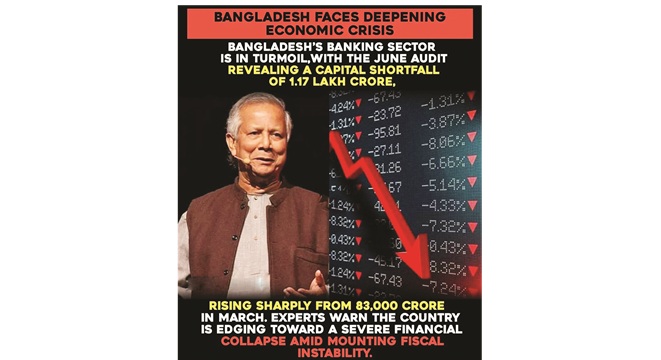
The banking sector, a critical support system, is itself
under stress. National Bank now carries NPLs of 75.46% of its loan book, and
liquidity pressures persist despite central bank support. High-profile
corporate failures, including the near-collapse of Beximco Textiles, underscore
systemic risks. Against this backdrop, Bangladesh’s foreign exchange reserves
have fallen sharply, the taka remains artificially supported, and investor
confidence is waning, creating fertile ground for competitors - most notably
India - to capture global orders.
Bangladesh’s textile-led growth model stands at a
crossroads. Labour safety, financial stability, governance, and policy
coherence are no longer separate challenges, they are interconnected threats.
How the country responds now will determine whether it can sustain its global
position or watch a critical industry, and national growth, slip away.
Bangladesh’s textile mills are struggling to survive. Over US$ 23 billion in investments across spinning, weaving, and processing now face collapse amid weak demand, rising costs, and import competition. The Bangladesh Textile Mills Association (BTMA) warns that nearly 58 units have partially or fully shut down, jeopardising around two million jobs. Millers are calling for urgent policy interventions, including extended export incentives, longer import credit periods, and safeguards for local yarn sourcing.
Subscribe To Textile Excellence Print Edition
If you wish to Subscribe to Textile Excellence Print Edition, kindly fill in the below form and we shall get back to you with details.
Newsletter
Subscribe To Textile Excellence Mailing List


- December 09, 2022
'There Is Very High Acceptance For India

- December 09, 2022
'Advanced Machines & Service, Customer C

- October 09, 2023
First-time In The World: Rieter’s Auto

- July 28, 2026
Arvind Eyes Leadership In India's Premiu

- June 01, 2020
Karl Mayer Enables Automated Production

- June 05, 2023
Ultimax - All New Revolutionary Rapier W

- June 09, 2025
DyStar Becomes A Wholly Owned Subsidiary

- July 28, 2026