
EU-India FTA: Impact On India’s Textile & Apparel Exports To EU
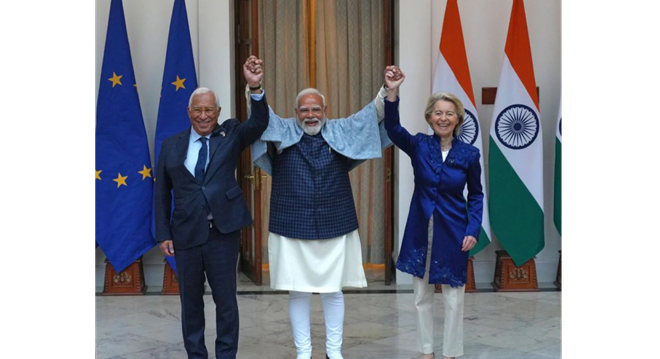
India and the European Union are set to conclude a landmark
free trade agreement after nearly two decades of negotiations, a pact leader on
both sides have described as the “mother of all deals.” The announcement at the
India-EU summit in New Delhi will bring together the world’s two largest
economic blocs, creating a market of around two billion consumers and
strengthening trade ties that accounted for US$136.5 billion in goods in
2024-25.
Under the proposed agreement, tariffs on a wide range of
goods will be reduced or eliminated, opening significant opportunities for
India’s labour-intensive sectors including textiles and apparel, leather,
engineering goods and processed foods. Indian textile exports to the EU
currently face tariff barriers of roughly 10-16%, placing them at a
disadvantage compared to competitors enjoying preferential access. Industry
stakeholders and trade bodies have called for zero duty access for cotton
textiles and garments to improve competitiveness.
The deal also aims to reduce import duties on European goods
such as automobiles, machinery and wines, expanding market access for EU
producers. Economic analysts expect the pact to boost bilateral trade further,
helping Indian exporters offset recent tariff pressures from the United States
and diversify export destinations. Ratification by Indian and EU legislative
bodies is expected to take around a year before implementation begins.
Indian apparel exports to the European Union currently face
import duties ranging between 9.6% and 12%, while several competing suppliers
enjoy duty free access under preferential trade schemes. Least Developed
Countries such as Bangladesh benefit from the EU’s Everything But Arms
framework, giving them zero duty access for apparel and textiles. This tariff
asymmetry has long eroded India’s price competitiveness despite strong
manufacturing depth, scale and compliance standards.
India exported apparel worth nearly US$17.5 billion to the
EU in 2024, making the bloc its largest destination after the United States.
Industry estimates suggest tariff elimination under the India EU trade
agreement could lift apparel exports to Europe by 20% to 25% within three
years, driven by improved margins and stronger buyer confidence.
A level playing field with Bangladesh, Vietnam and Cambodia
is expected to accelerate sourcing shifts towards India, especially for value
added categories, sustainable products and shorter lead time programs. The
agreement could also support India’s ambition to raise total textile and
apparel exports to US$100 billion by 2030, reinforcing its position as a
trusted global sourcing hub.
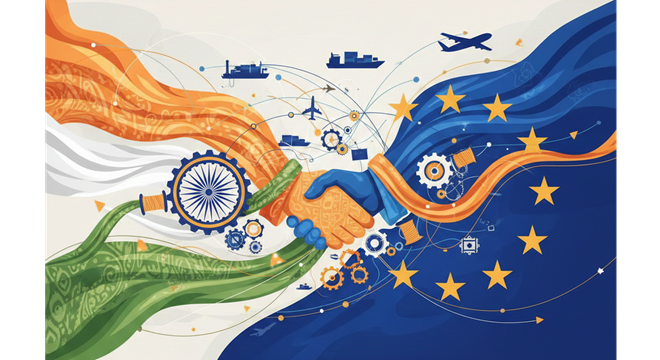
The deal also aims to reduce import duties on European goods such as automobiles, machinery and wines, expanding market access for EU producers. Economic analysts expect the pact to boost bilateral trade further, helping Indian exporters offset recent tariff pressures from the United States and diversify export destinations. Ratification by Indian and EU legislative bodies is expected to take around a year before implementation begins.
Subscribe To Textile Excellence Print Edition
If you wish to Subscribe to Textile Excellence Print Edition, kindly fill in the below form and we shall get back to you with details.
Newsletter
Subscribe To Textile Excellence Mailing List


- December 09, 2022
'There Is Very High Acceptance For India

- December 09, 2022
'Advanced Machines & Service, Customer C

- October 09, 2023
First-time In The World: Rieter’s Auto

- July 28, 2026
Arvind Eyes Leadership In India's Premiu

- June 01, 2020
Karl Mayer Enables Automated Production

- June 05, 2023
Ultimax - All New Revolutionary Rapier W
- June 09, 2025
DyStar Becomes A Wholly Owned Subsidiary

- July 28, 2026