
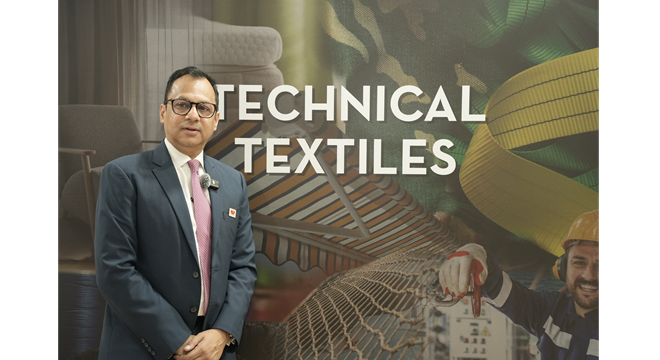
Kapil Agrawal Sees India Emerging As A Global Technical Textile Powerhouse
India’s technical textile industry is entering a
decisive growth phase, driven by innovation, quality upgrades and rising global
confidence, according to Mr Kapil Agrawal, Business Head, Textiles, Acrylic
Fibre and Overseas Spinning at Aditya Birla Group. Speaking ahead of Techtextil
Frankfurt 2026, Agrawal said Indian companies are steadily transforming from
cost competitive suppliers into credible global solution providers.
“This is the first time the entire group is presenting
under one roof,” Agrawal said, highlighting Aditya Birla Group’s integrated
showcase spanning protective apparel, mobility textiles, home textiles and
industrial applications. The company plans to position itself as a complete
value chain partner at the exhibition.
Agrawal believes India’s technical textile ecosystem has
matured significantly since 2016. “People have realised how important this
segment is. They are willing to invest, innovate and meet global standards,” he
noted.
The executive also addressed ongoing geopolitical
disruptions and supply chain volatility affecting the industry. Rising raw
material costs and longer lead times are placing pressure on manufacturers
globally. “Something which was available in 45 days today can go as high as 90
days,” he observed, adding that uncertainty across the value chain is delaying
procurement decisions and affecting plant utilisation.
Agrawal stressed that India’s competitive advantage now
extends beyond pricing. Faster delivery, policy support, textile parks and
stronger adherence to international quality benchmarks are helping Indian
manufacturers strengthen their global standing. He pointed to flame retardant
fibres and industrial applications as key innovation areas gaining traction
worldwide.
Sustainability and digital transformation are also
reshaping the sector. Agrawal said AI driven manufacturing systems are helping
improve process consistency and quality precision, while traceability and
digital product passports are rapidly becoming industry necessities. “Technical
textiles also will eventually move to traceability and digital passport could
be mandatory,” he said.
Sustainability and digital transformation are also reshaping the sector. Agrawal said AI driven manufacturing systems are helping improve process consistency and quality precision, while traceability and digital product passports are rapidly becoming industry necessities. “Technical textiles also will eventually move to traceability and digital passport could be mandatory” he said.
Subscribe To Textile Excellence Print Edition
If you wish to Subscribe to Textile Excellence Print Edition, kindly fill in the below form and we shall get back to you with details.
Newsletter
Subscribe To Textile Excellence Mailing List


- December 09, 2022
'There Is Very High Acceptance For India

- December 09, 2022
'Advanced Machines & Service, Customer C

- October 09, 2023
First-time In The World: Rieter’s Auto

- July 28, 2026
Arvind Eyes Leadership In India's Premiu

- June 01, 2020
Karl Mayer Enables Automated Production

- June 05, 2023
Ultimax - All New Revolutionary Rapier W

- June 09, 2025
DyStar Becomes A Wholly Owned Subsidiary
- July 28, 2026