
Respect For Our Customers Built Our Business, Women Empowerment Gave It Purpose
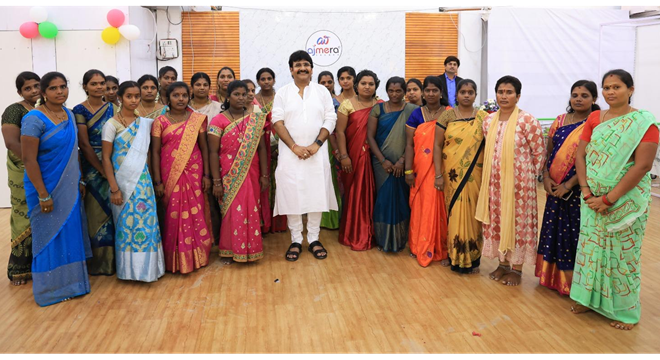
Ajmera Fashions has emerged as one of Surat’s largest textile companies in just over two decades, despite operating in one of India’s most crowded and competitive textile clusters. The company carved its own path by working directly with retailers, empowering women to become entrepreneurs, and building its business around a simple but powerful philosophy - Rate, Range and Respect. In an exclusive interview with Textile Excellence, Ajay Ajmera, Founder & CEO, Ajmera Fashions, speaks about his entrepreneurial journey, the idea behind “Har Ghar Business”, and his vision for the future of Surat’s textile industry. Today, you are known among Surat’s top textile companies. How did you achieve this? It is not easy. It has been a very long journey. I spent 19 years working in the textile industry before starting my own business. I came to Surat in 1992 and worked in manufacturing for nearly two decades. After that, I decided to quit my job and build something of my own. At that time, Surat’s textile market was already very crowded and competitive. But I believed there was still space for a different approach. You started your business at a time when the Surat textile industry was already saturated. So what did you have in mind? During my job, I noticed one thing very clearly. Small traders and retailers were often not treated seriously. In most places, the focus was only on big wholesalers and large buyers. I felt there was a gap in the system. I decided I would work differently. I wanted to go directly to the retailer. For me, the size of the buyer did not matter. Minimum order quantity did not matter either. I believed that if a retailer came to us with trust, we should value that relationship. That thinking slowly became the foundation of our business. Our principle is very simple: Rate, Range and Respect. Respect is especially important for us. Even if someone comes only to look around and says, “I have not come to buy, I just want to see,” we still treat that person with the same respect as a customer buying goods worth one crore rupees annually. That culture has helped us build long-term relationships, this is the basis of our business growth. Alongwith respect, we offer a very good range of products at the same price to retailers and wholesalers. So our business is based on bulk quantities, meaning – we buy huge amounts of raw materials directly and get it processed. Our volumes are large, helping us keep our prices reasonable. At the same time, we never compromise on quality. You are now planning an IPO as well. Tell us about that. Yes, we are working towards it seriously. The idea behind the IPO is expansion. Today, customers come to us asking for more variety and more categories. They tell us, “If you can provide everything under one roof, we will not have to go elsewhere.” To build that scale, investment is required. That is why we are preparing for an Initial Public Offering. Your company creates a huge number of designs. How do you track trends in a market as diverse as India? India is a very different market from the global fashion industry. Here, colours, festivals, local tastes and wedding seasons all play a very important role. Over the years, we have built a very strong database of market trends. We know what sells in different regions and cities. For example, we track what works in Mumbai markets, what works in North India, and what works in the South. If someone comes to us saying they want to start a business, we can actually guide them on what products are likely to work best in their area. We export to more than 32 countries, and our team members come from different states across India. If a customer from Tamil Nadu is not comfortable speaking Hindi, our Tamil-speaking staff member will guide them in Tamil and also explain what trends work there. Very few companies provide this kind of India-specific trend support. In textiles, success depends on supplying the right fabric at the right place and at the right time. Every state has its own wedding season, festivals and buying patterns. Stock planning has to match those cycles. You also built a strong YouTube presence and started something called “Har Ghar Business.” What was the idea behind it? Around 2014, when Prime Minister Narendra Modi began speaking strongly about women empowerment, it made a deep impact on me. I am not highly educated. I studied only till Class 11. But I realised something important — textiles is actually a women-centric business. I felt that if women were trained properly, this industry could create business opportunities for thousands of them. That is when we started making videos focused on women empowerment and entrepreneurship. We wanted even homemakers or women with limited education to feel confident enough to start a business. If a woman approaches us saying she wants to start a business, we guide and train her. Today, thousands of women are connected with us through this initiative. And the numbers only keep growing. Can you share some memorable stories from this journey? There are many such stories. In fact, these stories are the biggest satisfaction for us. One woman from Pune watched our videos and became very motivated to start a business. But she had a serious problem — she could not travel in closed vehicles. She could not sit in a car, train or even on a flight. Still, she was determined to come to Surat. Finally, she travelled all the way on a motorcycle. That moment stayed with me. I even made a video with her because her determination was extraordinary. Another incident happened just recently. When I entered my office around noon, a lady stopped me near the lift. She told me she had started her business after watching our videos. She said that in 2020 she wanted to come to Surat but did not have enough money. So instead of travelling, she bought goods worth ₹20,000 from Amravati and slowly started selling them. Over time, her business grew steadily. Today she came to Surat to meet me personally and thanked me emotionally. She told me, “I started with ₹20,000. Today I am doing ₹30–35 lakh business annually.” For us, these are the real achievements. There are countless such stories. Your story will inspire many people who are afraid to leave their comfort zone. That is exactly why we continue making these videos. When people see someone like themselves building a business step by step, it gives them confidence that they can do it too. Surat is often called the textile capital of India. A: Surat is not just the textile capital of India. In many ways, it is the textile capital of Asia. This is where fabric manufacturing truly begins. Good fabric is developed here, processed here and distributed from here. If you look at any textile business across India, directly or indirectly, Surat plays a role in it. Which are your strongest markets today? A: Bihar and several North Indian states are among our strongest markets. We have built a very strong presence there over the years. There is concern in the industry over the ongoing geopolitical tensions and their impact on polyester and synthetic textiles. Has Surat started feeling the pressure? Not immediately. During Covid also, the industry stood together and supported each other. We believe this situation will also stabilise. Right now, we have strong inventory levels and adequate stock. We are not seeing any major disruption at the moment. I would also like to tell the textile industry not to panic. We are fully stocked and operational. Hopefully, with the efforts being made at different levels, the situation will improve soon. In polyester and synthetics, the impact usually comes gradually. First, chip prices increase. Then yarn prices move up. After that, the effect reaches the market. These things take time. At present, we are fully prepared. No discussion on textiles is complete without sustainability. There is growing interest in agrowaste-based fibres such as hemp, banana fibre and pineapple fibre. Do you see potential for Surat in this segment? Absolutely. Sustainability is becoming extremely important for the future of textiles. And as I said earlier, all roads in textiles eventually lead to Surat. The Surat market, and Ajmera Group in particular, would definitely like to work with these fibres. But such initiatives need proper ecosystem support. For example, I may procure these fibres, convert them into yarn and even make grey fabric. But after that, processing becomes a challenge. Many process houses here still do not have the technology or expertise to handle such fabrics properly. This is where government support becomes essential. If India genuinely wants to promote sustainable textiles, the ecosystem has to be developed together - from fibre to processing. If that support comes, we would certainly like to move aggressively into these areas.
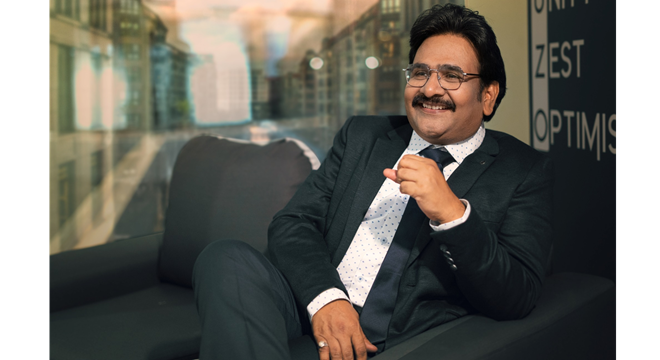
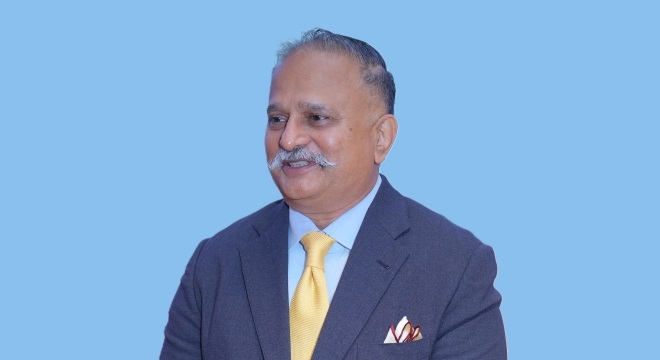
Our principle is very simple: Rate, Range and Respect. Respect is especially important for us. Even if someone comes only to look around and says, “I have not come to buy, I just want to see,” we still treat that person with the same respect as a customer buying goods worth one crore rupees annually. That culture has helped us build long-term relationships, this is the basis of our business growth. Alongwith respect, we offer a very good range of products at the same price to retailers and wholesalers. So our business is based on bulk quantities, meaning – we buy huge amounts of raw materials directly and get it processed. Our volumes are large, helping us keep our prices reasonable. At the same time, we never compromise on quality_ Ajay Ajmera, Founder and CEO, Ajmera Fashions
Subscribe To Textile Excellence Print Edition
If you wish to Subscribe to Textile Excellence Print Edition, kindly fill in the below form and we shall get back to you with details.
Newsletter
Subscribe To Textile Excellence Mailing List


- December 09, 2022
'There Is Very High Acceptance For India

- December 09, 2022
'Advanced Machines & Service, Customer C

- October 09, 2023
First-time In The World: Rieter’s Auto
- July 28, 2026
Arvind Eyes Leadership In India's Premiu

- June 01, 2020
Karl Mayer Enables Automated Production

- June 05, 2023
Ultimax - All New Revolutionary Rapier W
- June 09, 2025
DyStar Becomes A Wholly Owned Subsidiary
- July 28, 2026