
India Oman CEPA Set To Transform Textile Exports And Open New Growth Corridors
India and Oman have signed a landmark Comprehensive Economic
Partnership Agreement that is expected to significantly strengthen India’s
textile and apparel exports and deepen economic integration with the Gulf
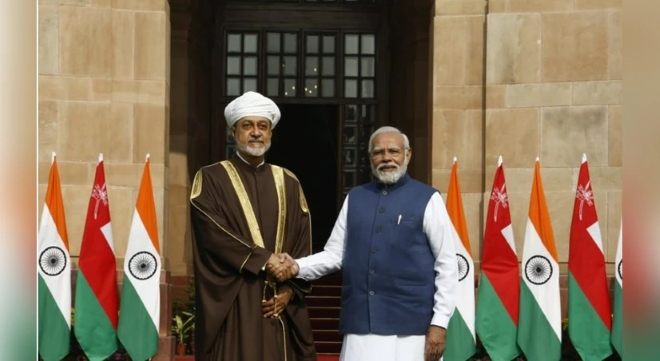
region. The agreement was signed on December 18, 2025 in Muscat in the presence
of Prime Minister Narendra Modi and His Majesty Sultan Haitham bin Tarik,
marking a major milestone in bilateral trade relations.
Industry bodies have welcomed the development, calling it a
strong positive for India’s labour-intensive textile and clothing sector. The
Confederation of Indian Textile Industry said the agreement will improve market
access and enhance the price competitiveness of Indian textile products in
Oman. India currently ranks as the second largest exporter of textiles and
apparel to Oman after China. In 2024, India’s textile and apparel exports to
Oman stood at US$131.76 million, indicating steady demand and clear headroom
for growth.
The CEPA provides zero duty access on 98.08% of Oman’s
tariff lines, covering 99.38% of India’s exports by value. This near universal duty-free
access is expected to benefit key segments such as apparel and clothing, home
textiles, textile fabrics, yarn, and made ups. Industry leaders believe this
will help Indian exporters capture a larger share of the Omani textiles market
while supporting long term export diversification.
India’s overall textile and apparel exports stood close to
US$38 billion in financial year 2024 25. The government has set an ambitious
target of reaching US$100 billion in textile and apparel exports by 2030. Trade
agreements such as the India Oman CEPA are seen as critical instruments to
achieve this goal, especially at a time when exporters are navigating global
demand volatility.
The agreement also complements India’s broader trade
strategy. India signed a comprehensive trade agreement with the United Kingdom
earlier this year and remains engaged in advanced negotiations with the
European Union, New Zealand, and the United States. Together, these
arrangements are expected to create new export opportunities while safeguarding
domestic manufacturing interests.
Industry observers note that recent export data for November
2025 reflects strong resilience among Indian exporters despite global
headwinds. The India Oman CEPA is expected to add fresh momentum to this trend,
particularly for textiles, which remains one of India’s largest employment
generating sectors.
 during a bilateral meeting, in Muscat, Oman TE.jpg)
The CEPA provides zero duty access on 98.08% of Oman’s tariff lines, covering 99.38% of India’s exports by value. This near universal duty-free access is expected to benefit key segments such as apparel and clothing, home textiles, textile fabrics, yarn, and made ups. Industry leaders believe this will help Indian exporters capture a larger share of the Omani textiles market while supporting long term export diversification.
Subscribe To Textile Excellence Print Edition
If you wish to Subscribe to Textile Excellence Print Edition, kindly fill in the below form and we shall get back to you with details.
Newsletter
Subscribe To Textile Excellence Mailing List


- December 09, 2022
'There Is Very High Acceptance For India

- December 09, 2022
'Advanced Machines & Service, Customer C

- October 09, 2023
First-time In The World: Rieter’s Auto

- July 28, 2026
Arvind Eyes Leadership In India's Premiu

- June 01, 2020
Karl Mayer Enables Automated Production

- June 05, 2023
Ultimax - All New Revolutionary Rapier W

- June 09, 2025
DyStar Becomes A Wholly Owned Subsidiary

- July 28, 2026