

Why Standards Now Decide Economic Winners
From
textile labels to 5G networks, international standards are quietly redrawing
the global economic map. But while rich nations and multinational giants reap
the rewards, many developing countries are being left behind, warns a new World
Bank report.
According
to the World Development Report 2025: Standards for Development, standards have
become core economic infrastructure, as critical today as roads, ports or power
grids. They decide how goods move, how services connect, and who gets access to
global markets.
The
report offers a striking example: the standardised shipping container. Its
adoption boosted global trade more than all trade agreements signed over the
last 60 years. Yet standards are no longer just facilitators. They have also
become powerful trade weapons.
Non-tariff
measures such as pesticide limits, technical specifications and labelling rules
now affect 90% of global trade, up from just 15% in the late 1990s. In many
cases, these rules block market access for exporters from poorer economies that
lack the capacity to comply.
“Standards
are central to today’s economy, but they often go unnoticed,” said Indermit
Gill, Chief Economist of the World Bank Group. “When they work, no one thinks
about them. But when countries are excluded from setting them, the cost is
enormous.”
The
scale of standard-setting has exploded. Of the roughly 20,000 standards issued
by the International Organization for Standardization (ISO) over the past 70
years, more than half have been created since 2000. In 2024 alone, global
standard bodies issued over 7,000 new standards.
Yet
developing countries are largely absent where it matters most - at the table.
On average, they participate in less than one-third of ISO’s technical
committees, and even less in other global bodies. Limited funding, skills and
institutional capacity keep them out of rule-making rooms that shape global
commerce.
ISO
Secretary-General Sergio Mujica called the report a wake-up call. “Standards
are no longer invisible infrastructure. They are essential for inclusive and
sustainable development. Every country must be able to help shape them, not
just follow them.”
A
roadmap: Adapt, align, author
The
World Bank proposes a clear strategy. Poorer countries should adapt global
standards to local realities instead of blindly copying strict rules they
cannot meet. As capacity improves, they should align with international
standards to reduce duplication and help firms export. Over time, they should
move to author standards, shaping global rules to reflect national priorities.
Why
Japan matters
Japan’s
post-war experience shows how powerful this approach can be. After World War
II, Japanese exports were seen as cheap and unreliable. Instead of accepting
that label, Japan made quality its mission.
Through
the Japanese Standards Association and the widespread adoption of Total Quality
Management, the country first copied global standards, then improved them. Over
time, Japan became a global benchmark for quality manufacturing, from
automobiles to electronics.
“Standards
are not just technical rules,” said Xavier Giné, Director of the 2025 World
Development Report. “They are the foundation of innovation and competitiveness.
Countries that treat standards as a development tool are the ones that climb
the economic ladder.”
The
message is blunt: in today’s global economy, standards decide who wins and who
gets locked out. For developing nations, staying passive is no longer an
option.
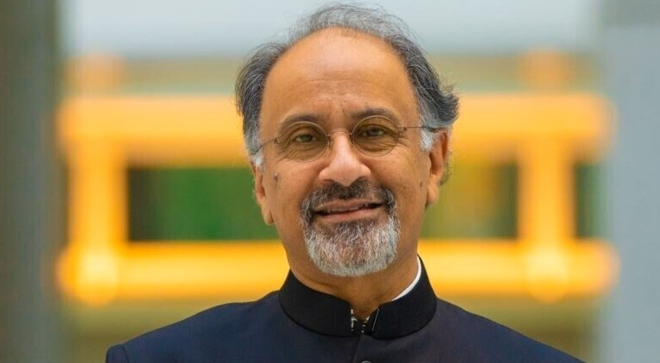
“Standards are central to today’s economy, but they often go unnoticed,” said Indermit Gill, Chief Economist of the World Bank Group. “When they work, no one thinks about them. But when countries are excluded from setting them, the cost is enormous.”
Subscribe To Textile Excellence Print Edition
If you wish to Subscribe to Textile Excellence Print Edition, kindly fill in the below form and we shall get back to you with details.
Newsletter
Subscribe To Textile Excellence Mailing List


- December 09, 2022
'There Is Very High Acceptance For India

- December 09, 2022
'Advanced Machines & Service, Customer C

- October 09, 2023
First-time In The World: Rieter’s Auto

- July 28, 2026
Arvind Eyes Leadership In India's Premiu

- June 01, 2020
Karl Mayer Enables Automated Production

- June 05, 2023
Ultimax - All New Revolutionary Rapier W

- June 09, 2025
DyStar Becomes A Wholly Owned Subsidiary
- July 28, 2026