
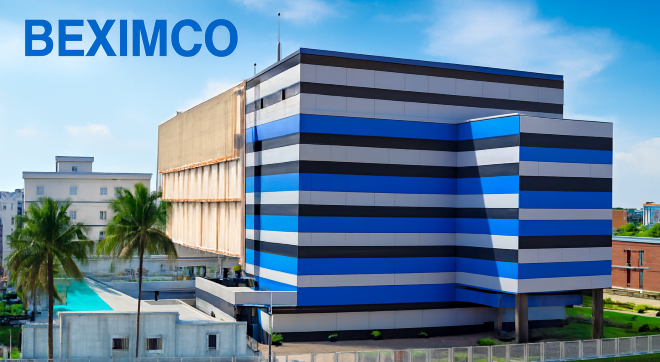
Beximco: A Corporate Collapse The System Can’t Ignore
The interim government of Bangladesh has shelved a
near-final revival plan for the debt-laden Beximco textile factories, choosing
instead to lease the assets through an open tender as banks seek to claw back
more than Tk 35,000 crore in defaulted loans. The move marks a decisive shift
from negotiated rescue to market-driven recovery, and underscores the depth of
Bangladesh’s industrial and financial stress.
The decision was taken on the instructions of Chief Adviser
Muhammad Yunus and places the Bangladesh Investment Development Authority
(BIDA) in charge of the leasing process. Minutes from an 8 December meeting of
the Advisory Council Committee on labour and business conditions at the Beximco
Industrial Park show that authorities abandoned talks with Japan’s Revival
Japan Projects despite months of advanced negotiations.
Officials said the proposed revival plan - structured around
a single foreign operator - conflicted with public procurement principles,
given the scale of public exposure and state involvement. An open tender, they
argued, offered greater transparency and reduced political risk. The choice,
however, also reflects the government’s unwillingness to assume further
reputational or financial liability in one of the country’s most politically
sensitive corporate failures.
Following the shelving of the deal, Janata Bank moved to
auction several Beximco units to recover dues. That effort has since been
stalled after a court imposed a stay order at the request of the Beximco Group,
highlighting how legal challenges continue to complicate loan recovery across
Bangladesh’s banking system.
Janata Bank Managing Director Md Mazibur Rahman told the
meeting that a tripartite framework involving Beximco, Revival and the bank had
been discussed but was dropped following directives from higher authorities.
The bank has since published advertisements to sell mortgaged assets,
signalling a harder line on recovery. The committee agreed that priority must
be given to recovering the Tk 600 crore interest-free government loan used to
clear workers’ unpaid wages.
Beximco Textiles Limited operates 15 factories at the
industrial park and is owned by Salman F Rahman, former private industry
adviser to ousted prime minister Sheikh Hasina, now jailed on multiple
corruption and criminal charges. The factories were shut in February after
months of wage arrears and loan defaults. Of the group’s total liabilities,
nearly Tk 23,000 crore is owed to Janata Bank alone, with all loans classified
as non-performing.
Under the abandoned proposal, Revival had offered to inject
US$ 20 million in working capital without assuming legacy debt, operating the
factories using existing infrastructure and retaining roughly half of net
profits, with the remainder earmarked for loan repayment. Beximco itself would
have received nothing.
While Revival has said it may participate in the tender, the
broader lesson is starker. Beximco’s collapse is not just a corporate failure, it
is a case study in how political patronage, weak banking discipline and delayed
accountability can devastate jobs, balance sheets and industrial credibility.
For Bangladesh, the question is no longer how to revive Beximco, but how many
similar collapses the system can absorb.
Following the shelving of the deal, Janata Bank moved to auction several Beximco units to recover dues. That effort has since been stalled after a court imposed a stay order at the request of the Beximco Group, highlighting how legal challenges continue to complicate loan recovery across Bangladesh’s banking system.
Subscribe To Textile Excellence Print Edition
If you wish to Subscribe to Textile Excellence Print Edition, kindly fill in the below form and we shall get back to you with details.
Newsletter
Subscribe To Textile Excellence Mailing List


- December 09, 2022
'There Is Very High Acceptance For India

- December 09, 2022
'Advanced Machines & Service, Customer C

- October 09, 2023
First-time In The World: Rieter’s Auto
- July 28, 2026
Arvind Eyes Leadership In India's Premiu

- June 01, 2020
Karl Mayer Enables Automated Production

- June 05, 2023
Ultimax - All New Revolutionary Rapier W
- June 09, 2025
DyStar Becomes A Wholly Owned Subsidiary
- July 28, 2026