
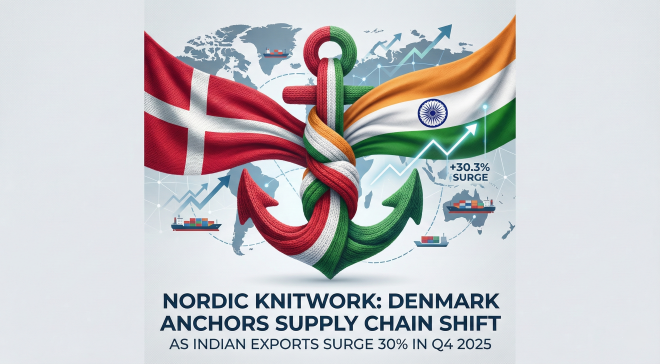
Nordic Pivot: Denmark Becomes Vital Textile Hub For India Amidst US Tariff Shocks
Global trade dynamics underwent a drastic transformation in
late 2025. The United States imposed punitive reciprocal tariffs of up to 50%
on Indian merchandise. This protectionist wave compels Indian exporters to
aggressively seek alternative markets. Denmark has consequently emerged as a
high value sanctuary. The Green Strategic Partnership signed in 2020 underpins
this commercial evolution. It aligns Indian manufacturing capabilities with
rigorous Scandinavian sustainability standards.
Analyzing the 2025 Export Surge
Official Ministry of Commerce data reveals a compelling
growth story. India exported goods worth US$ 82.8 million to Denmark in October
2025. This figure marks a significant 30.3% increase compared to the previous
year. The total import value from India to Denmark reached US$ 1.07 billion in
2024. Woven apparel led the sector with US$ 174.84 million. Knitwear segments
followed at US$ 72.09 million. Home textiles contributed US$ 51.90 million
while carpets and floor coverings added US$ 22.50 million. Recent data from
November 2025 indicates that overall Indian textile and apparel exports grew by
9.4% globally. This momentum suggests that Danish buyers are increasing their
orders to hedge against supply chain volatility elsewhere.
Corporate Powerhouses Driving Demand
Danish fashion giants provide the necessary volume to
sustain this trade corridor. Bestseller A/S recorded an all-time high revenue
of US$ 5.92 billion for the financial year 2024 2025. Brands such as Jack &
Jones and Vero Moda continue to deepen their sourcing footprints in India.
Hummel International sources approximately 14% of its global production from
Indian factories. These companies demand strict environmental compliance. The
European Union Eco design for Sustainable Products Regulation mandates comprehensive
traceability. Leading Indian manufacturers like Welspun Living have adopted
blockchain solutions to ensure farm to shelf transparency. Welspun Living
reported a 53.2% increase in net profit during the second quarter of the 2025
2026 fiscal year. This financial health demonstrates the viability of
diversifying away from the US market.
Future Opportunities and Regulatory Compliance
Regional competitors face mounting challenges. Bangladesh
grapples with political instability and the impending loss of duty-free access
upon its Least Developed Country graduation. This geopolitical vacuum presents
a unique opportunity for Indian exporters to consolidate their market share.
The Green Strategic Partnership facilitates crucial knowledge transfer
regarding water treatment and waste management technologies. Indian suppliers
must urgently adopt the Digital Product Passport to navigate the regulatory
landscape. Denmark serves not merely as a destination but as a gateway to the
broader European Union. Indian exporters who prioritize sustainability and
digital integration will secure long term dominance in this lucrative Nordic
market.
The total import value from India to Denmark reached US$ 1.07 billion in 2024. Woven apparel led the sector with US$ 174.84 million. Knitwear segments followed at US$ 72.09 million. Home textiles contributed US$ 51.90 million while carpets and floor coverings added US$ 22.50 million. Recent data from November 2025 indicates that overall Indian textile and apparel exports grew by 9.4% globally. This momentum suggests that Danish buyers are increasing their orders to hedge against supply chain volatility elsewhere.
Subscribe To Textile Excellence Print Edition
If you wish to Subscribe to Textile Excellence Print Edition, kindly fill in the below form and we shall get back to you with details.
Newsletter
Subscribe To Textile Excellence Mailing List


- December 09, 2022
'There Is Very High Acceptance For India

- December 09, 2022
'Advanced Machines & Service, Customer C

- October 09, 2023
First-time In The World: Rieter’s Auto
- July 28, 2026
Arvind Eyes Leadership In India's Premiu

- June 01, 2020
Karl Mayer Enables Automated Production

- June 05, 2023
Ultimax - All New Revolutionary Rapier W
- June 09, 2025
DyStar Becomes A Wholly Owned Subsidiary
- July 28, 2026