
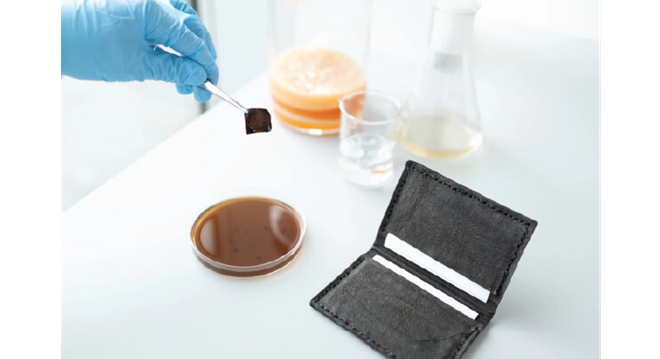
Bio-Black Beauty From Microbes
Traditional cow leather has a high environmental cost.
Forests are cleared for grazing, feedlots produce concentrated waste, and
methane emissions contribute significantly to climate change. Tanning is
water-intensive, and colouring often relies on toxic synthetic dyes. For
textile and apparel companies, these challenges are not just environmental,
they’re business risks, from compliance pressures to consumer scrutiny.
Enter bacterial leather, or bacterial cellulose (BC).
Already celebrated as a sustainable alternative, it’s now becoming smarter and
cleaner. Researchers at Imperial College London, led by Prof. Tom Ellis and Dr.
Kenneth Walker, have engineered a strain of Komagataeibacter rhaeticus that not
only produces BC sheets but also colours them naturally, eliminating the need
for harmful dyes.
Here’s the process in textile terms: bacteria are grown for
14 days to form flexible BC sheets. Then, a specially formulated solution
triggers the microbes to produce eumelanin, a natural black pigment. Within 48
hours, the material is permanently black - no fading, no wastewater, no
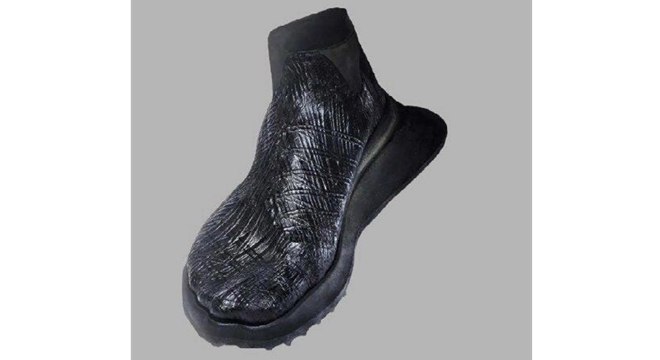
chemical processing. After mild sterilisation and shaping, the sheets can be
sewn into wallets, shoes, or other leather goods. In long-term tests, the
colour remained intact even after 42 months of use.
And black is just the beginning. The team is developing
bacteria that respond to light patterns, allowing designers to “print” logos or
multicolour designs directly into the material. For textile and fashion
companies, this means precision customisation at the microbial level, a
capability that could redefine leather and technical textile applications.
For the textile sector, the implications are significant:
Sustainability: Reduces water, chemical, and
livestock impact—key for ESG compliance.
Innovation: Opens doors to bio-fabricated,
high-performance materials.
Design Freedom: Grow colour, patterns, and textures
directly into the material.
Market Advantage: Aligns with consumer demand for
eco-conscious, functional, and aesthetic products.
As the boundaries between material science, biotechnology,
and textiles blur, innovations like bacterial leather are not a distant
novelty, they are the future of fashion and technical textiles. Brands and
manufacturers that adopt these methods early could gain a first-mover advantage
in sustainability, performance, and design flexibility.
“Microbes are already solving many of the problems of animal
and plastic-based leather,” Ellis notes. “We plan to expand into new colours,
materials, and patterns—and work with the fashion industry to make production
greener from start to finish.”
For textile leaders, it’s time to pay attention: the next
revolution in leather isn’t made in tanneries, it’s grown in a lab.
As the boundaries between material science, biotechnology, and textiles blur, innovations like bacterial leather are not a distant novelty, they are the future of fashion and technical textiles. Brands and manufacturers that adopt these methods early could gain a first-mover advantage in sustainability, performance, and design flexibility.
Subscribe To Textile Excellence Print Edition
If you wish to Subscribe to Textile Excellence Print Edition, kindly fill in the below form and we shall get back to you with details.
Newsletter
Subscribe To Textile Excellence Mailing List


- December 09, 2022
'There Is Very High Acceptance For India

- December 09, 2022
'Advanced Machines & Service, Customer C

- October 09, 2023
First-time In The World: Rieter’s Auto

- July 28, 2026
Arvind Eyes Leadership In India's Premiu
- June 01, 2020
Karl Mayer Enables Automated Production

- June 05, 2023
Ultimax - All New Revolutionary Rapier W

- June 09, 2025
DyStar Becomes A Wholly Owned Subsidiary

- July 28, 2026