
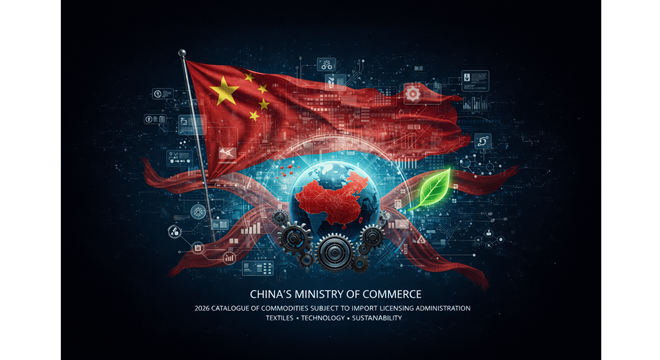
China Tightens Import Licensing
China’s Ministry of Commerce has brought
the 2026 Catalogue of Commodities Subject to Import Licensing Administration
into force from 1 January 2026, replacing the previous 2024 framework. While
the announcement is regulatory in nature, it carries direct implications for
select segments of the textile chain.
The catalogue governs products that require
prior import licences, typically covering goods linked to environmental
control, safety, technology, and strategic oversight. For textiles, the impact
is upstream rather than downstream.
The most immediate relevance is for used
and remanufactured textile machinery. Imports of second-hand spinning, weaving,
processing, and finishing equipment are likely to face tighter approvals,
longer lead times, and higher compliance scrutiny, particularly under China’s
rules for key used electrical and mechanical products. Mills relying on
refurbished machinery should factor this into capex planning.
There is also moderate exposure for textile
chemicals and processing inputs, especially substances linked to environmental
regulation or ozone-depleting controls. Processing houses and technical textile
units may see higher documentation and licensing requirements.
The most immediate relevance is for used and remanufactured textile machinery. Imports of second-hand spinning, weaving, processing, and finishing equipment are likely to face tighter approvals, longer lead times, and higher compliance scrutiny, particularly under China’s rules for key used electrical and mechanical products. Mills relying on refurbished machinery should factor this into capex planning.
Subscribe To Textile Excellence Print Edition
If you wish to Subscribe to Textile Excellence Print Edition, kindly fill in the below form and we shall get back to you with details.
Newsletter
Subscribe To Textile Excellence Mailing List


- December 09, 2022
'There Is Very High Acceptance For India

- December 09, 2022
'Advanced Machines & Service, Customer C

- October 09, 2023
First-time In The World: Rieter’s Auto

- July 28, 2026
Arvind Eyes Leadership In India's Premiu

- June 01, 2020
Karl Mayer Enables Automated Production

- June 05, 2023
Ultimax - All New Revolutionary Rapier W
- June 09, 2025
DyStar Becomes A Wholly Owned Subsidiary

- July 28, 2026