
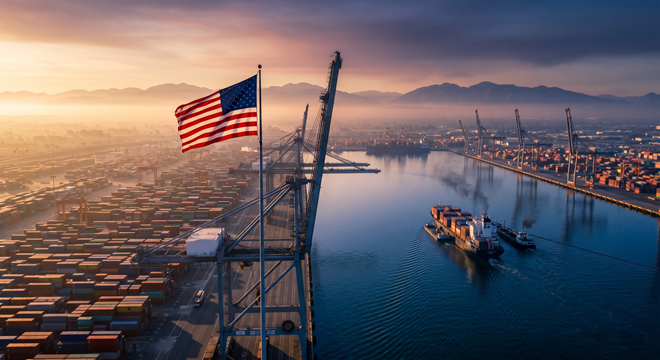
US: Resilient Trade In A High Cost Cycle
Import volumes at major
U.S. container ports remain largely unaffected by the Iran conflict, but rising
fuel costs are emerging as a growing concern for retailers, according to the
latest Global Port Tracker from the National Retail Federation and Hackett
Associates.
“Retailers don’t import
much from the Middle East, but disruption anywhere has ripple effects,” said
NRF’s Jonathan Gold, pointing to rerouted vessels, higher fuel costs and softer
consumer spending as key risks. Retailers, he added, are “monitoring daily” and
working to limit disruption, even as tariffs and policy uncertainty continue to
push prices upward.
Tariffs remain a parallel
pressure. The U.S. government has imposed a temporary 10% global tariff under
the Trade Act of 1974, revised Section 232 duties on metals and extended new
tariffs to pharmaceuticals. These measures are weighing more directly on import
volumes than geopolitical tensions.
U.S. ports handled 1.95
million TEU in February, down both month-on-month and year-on-year. First-half
2026 imports are projected at 12.3 million TEU, slightly below 2025 levels,
with uneven monthly trends.
Taken together, the data
points to a supply chain that remains operationally stable but increasingly
cost-pressured. Elevated fuel prices are feeding into inflation, squeezing
margins for businesses and limiting consumer spending power, creating a broader
drag on trade momentum and economic growth.

“Retailers don’t import much from the Middle East, but disruption anywhere has ripple effects,” said NRF’s Jonathan Gold, pointing to rerouted vessels, higher fuel costs and softer consumer spending as key risks. Retailers, he added, are “monitoring daily” and working to limit disruption, even as tariffs and policy uncertainty continue to push prices upward.
Subscribe To Textile Excellence Print Edition
If you wish to Subscribe to Textile Excellence Print Edition, kindly fill in the below form and we shall get back to you with details.
Newsletter
Subscribe To Textile Excellence Mailing List


- December 09, 2022
'There Is Very High Acceptance For India

- December 09, 2022
'Advanced Machines & Service, Customer C

- October 09, 2023
First-time In The World: Rieter’s Auto

- July 28, 2026
Arvind Eyes Leadership In India's Premiu

- June 01, 2020
Karl Mayer Enables Automated Production

- June 05, 2023
Ultimax - All New Revolutionary Rapier W
- June 09, 2025
DyStar Becomes A Wholly Owned Subsidiary

- July 28, 2026