
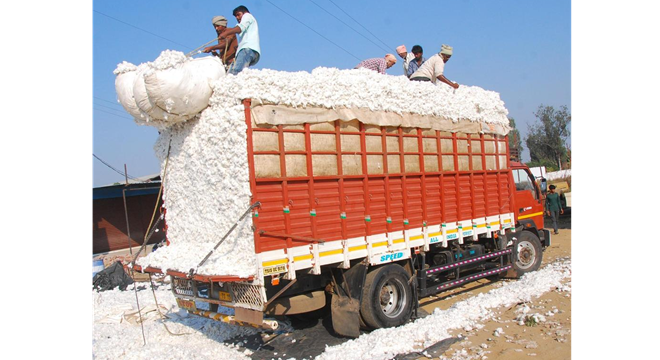
Government To Pay MSP To Cotton Farmers Directly
The Centre is preparing a
major structural shift in how cotton farmers are supported under the Minimum
Support Price (MSP) framework, moving away from physical procurement toward a
direct benefit model that transfers price support into bank accounts.
Instead of relying on
agencies such as the Cotton Corporation of India (CCI) to purchase cotton when
market prices fall below MSP, the government is designing a Price Deficiency
Payment Scheme that compensates farmers directly for the gap between MSP and
market prices.
Under the existing system,
procurement operations have expanded significantly, with around 3.3 million
bales procured this season. However, the model has remained under strain due to
persistent challenges in storage, warehousing, and transportation, adding
operational complexity and cost.
The new approach removes
the need for large-scale physical procurement. Farmers will sell cotton in open
markets as usual. If prices fall below MSP, the difference will be transferred
directly to their bank accounts, ensuring income protection without building
stockpiles.
Pilot in Andhra Pradesh and
Telangana
The scheme is set to be
piloted in Andhra Pradesh and Telangana, where farmer databases and mandi
linkages have already been digitised. This digital readiness makes them
suitable testing grounds for direct benefit transfer in agricultural price
support.
The proposal has been
reviewed in a high-level meeting at NITI Aayog, with participation from
government agencies, industry stakeholders, and farmer representatives,
indicating strong institutional backing for the transition.
If implemented effectively,
the system is expected to reduce dependence on intermediaries, lower
administrative friction, and improve the speed and efficiency of support
delivery. More importantly, it signals a policy evolution toward market-linked
income protection rather than procurement-led intervention.
Cotton prices cross ₹8,500,
but benefits arrive too late for many farmers
In parallel, cotton markets
have seen a sharp price rally, with rates crossing ₹8,500 per quintal, driven
by firm demand and global supply-side uncertainties. The surge has revived
sentiment across key growing regions such as Jalgaon and wider cotton belts,
where farmers had endured a prolonged phase of subdued prices.
While the price increase
marks a strong recovery signal, its immediate benefit remains limited. Most
farmers have already sold their produce, leaving only a small portion of output
exposed to the higher price cycle. As a result, the current rally is providing
more psychological relief than direct income gains in this season.
However, the signal from
the market is already shaping future decisions. Early indications suggest
farmers may expand cotton acreage by 10–15% in the next sowing cycle,
responding to improved price expectations and stronger demand visibility.
This reflects a recurring
dynamic in agricultural commodities: price spikes tend to influence production
decisions more than they improve current incomes, as timing mismatches dilute
immediate gains.
Rail link restored, cutting
cotton logistics costs in Vidarbha
Adding momentum to the
sector, rail transport of cotton bales from Nagpur has resumed after more than
a year, restoring a critical logistics channel for the Vidarbha region.
The earlier suspension had
forced traders and ginners to depend on road transport, raising costs and
reducing efficiency in bulk movement. With rail connectivity restored, cotton
logistics are expected to become more cost-effective and predictable, particularly
for long-distance shipments to textile hubs and ports.
Nagpur, a key cotton
trading centre, is expected to benefit directly from improved freight
efficiency, which could revive trading volumes and strengthen market activity.
The development highlights a broader reality in agricultural supply chains:
infrastructure efficiency is as decisive as pricing in determining
competitiveness and trade flow.
A sector in transition
Taken together, the shift
to direct MSP deficiency payments, the price recovery cycle, and improved
logistics reflect a cotton economy in transition, moving toward digitally
enabled support systems, more responsive market signals, and structurally
leaner supply chains.
Taken together, the shift to direct MSP deficiency payments, the price recovery cycle, and improved logistics reflect a cotton economy in transition, moving toward digitally enabled support systems, more responsive market signals, and structurally leaner supply chains.
Subscribe To Textile Excellence Print Edition
If you wish to Subscribe to Textile Excellence Print Edition, kindly fill in the below form and we shall get back to you with details.
Newsletter
Subscribe To Textile Excellence Mailing List


- December 09, 2022
'There Is Very High Acceptance For India

- December 09, 2022
'Advanced Machines & Service, Customer C

- October 09, 2023
First-time In The World: Rieter’s Auto

- July 28, 2026
Arvind Eyes Leadership In India's Premiu

- June 01, 2020
Karl Mayer Enables Automated Production

- June 05, 2023
Ultimax - All New Revolutionary Rapier W

- June 09, 2025
DyStar Becomes A Wholly Owned Subsidiary

- July 28, 2026