
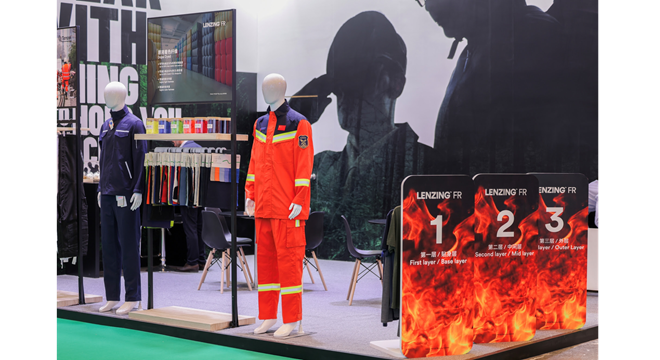
Lenzing Rolls Out 3-Tier Fibre System For Advanced Protective Wear
Lenzing
Group has launched Lenzing Solutions for Protective Wear, a new three-tier
portfolio. At the top are LENZING™ FR fibres, designed for inherent flame
resistance. The range also includes TENCEL™ Lyocell fibres.
All
fibres are EU Ecolabel-certified and sourced from certified or controlled wood.
For the first time, Lenzing is offering these solutions as one integrated
system. This marks its biggest expansion in protective wear since introducing
flame-resistant cellulosic fibres in 1977. The timing aligns with a
fast-growing PPE market, expected to reach about US$130 billion by 2033.
The
portfolio was introduced in Asia-Pacific at CIOSH Shanghai (7–9 April). Kevin
Sun noted that the event brings together over 90% of China’s FR industry. It
was used to strengthen partnerships and launch a refreshed brand identity in
China, which customers described as clear, elegant, and impactful.
The
portfolio is structured across three protection levels.
Inherent
protection uses LENZING™ FR fibres, often blended with aramid.
Flame resistance is built into the fibre, so it does not fade with washing.
These fibres also offer over 70% higher wet strength than conventional FR
viscose and are suitable for ISO-compliant protective clothing, including for
sensitive skin.
Hybrid
protection combines TENCEL™ Lyocell A100 fibres with modacrylic.
These blends improve comfort, enable high-visibility colours, and maintain a
smooth, non-fibrillating surface.
FR-finished
protection uses TENCEL™ Lyocell with flame-retardant finishing. It
offers a cost-effective solution for industries like steel, welding, and
metals, while using less water than conventional cotton.
Applications
are clearly segmented. LENZING™ FR fibres target high-risk sectors such as
firefighting, military, and utilities. Hybrid solutions serve oil and gas and
industrial workwear. FR-finished options focus on cost-sensitive heavy
industries.
Performance
data supports the positioning. Tests at 35°C show garments with LENZING™ FR
blends raise core body temperature by just 0.75°C, compared to 1.05°C for
FR-treated cotton. Wearers also sustained physical activity longer.
Sustainability
gains are also significant. Dope-dyed LENZING™ FR fibres cut energy and water
use by up to 50% and reduce carbon footprint by up to 60% versus conventional
dyeing.
Applications are clearly segmented. LENZING™ FR fibres target high-risk sectors such as firefighting, military, and utilities. Hybrid solutions serve oil and gas and industrial workwear. FR-finished options focus on cost-sensitive heavy industries. Performance data supports the positioning. Tests at 35°C show garments with LENZING™ FR blends raise core body temperature by just 0.75°C, compared to 1.05°C for FR-treated cotton. Wearers also sustained physical activity longer.
Subscribe To Textile Excellence Print Edition
If you wish to Subscribe to Textile Excellence Print Edition, kindly fill in the below form and we shall get back to you with details.
Newsletter
Subscribe To Textile Excellence Mailing List


- December 09, 2022
'There Is Very High Acceptance For India

- December 09, 2022
'Advanced Machines & Service, Customer C

- October 09, 2023
First-time In The World: Rieter’s Auto
- July 28, 2026
Arvind Eyes Leadership In India's Premiu
- June 01, 2020
Karl Mayer Enables Automated Production

- June 05, 2023
Ultimax - All New Revolutionary Rapier W
- June 09, 2025
DyStar Becomes A Wholly Owned Subsidiary

- July 28, 2026