
Sharp Rise in Crude Oil Prices
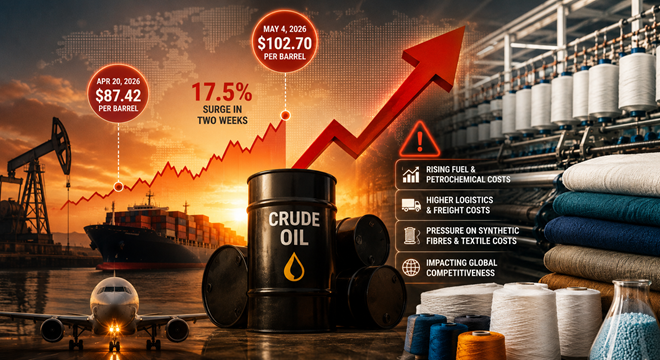
The sharp rise in Crude Oil (NYMEX) from $87.42 on
April 20 to $102.70 on May 4, 2026, represents a significant 17.5%
surge in just two weeks. This rally is primarily driven by escalating
geopolitical conflict in the Middle East and critical supply chain
disruptions.
Key Drivers of the Price Surge
Strait of Hormuz Blockade:
The most critical factor is the effective closure of the Strait of Hormuz.
Approximately 20-30% of global seaborne oil trade passes through this
narrow corridor, and recent military tensions between the U.S., Israel, and Iran
have halted most shipping traffic
Military Escalation:
Reports of missiles striking a U.S. warship and new Iranian naval maps
designating "military control zones" in the Persian Gulf have
intensified fears of a prolonged conflict.
Supply "Shut-ins":
In response to the shipping risks, major producers like Saudi Arabia, Iraq,
and the UAE have had to "shut in" or reduce production because
they cannot safely export their crude.
Failed Peace Negotiations:
Markets reacted sharply on May 4 to the absence of a peace agreement and
reports that a potential ceasefire was "falling apart".
Market Impact as of May 4, 2026
WTI Crude: West Texas
Intermediate futures jumped to around $105 per barrel in intraday
trading on May 4 as exchange of fire was reported in the Strait.
Refined Products:
The surge has spilled over into retail markets, with gasoline and diesel prices
hitting two-year highs. In India, oil marketing companies are facing
"unprecedented losses," leading to anticipated hikes in domestic fuel
prices.
Analyst Sentiment:
Technical indicators like the CCI (20) remain bullish, signalling a
strong upward trend as long as the "war premium" remains priced into
the market.
Impact on global stock markets or retail
fuel prices in specific regions
The oil price surge in early May 2026 has sent
shockwaves through both financial markets and local economies. While energy
companies are seeing record gains, the broader global market is grappling with
the resulting inflationary pressure.
1. Global Stock Market Reactions
The surge to over $100 per barrel has created a
sharp divide between winners and losers in the equity markets:
S&P 500 & Global Indices:
Major indices saw significant volatility. On May 4, 2026, the U.S.
market erased approximately $520 billion in value in a single day as
geopolitical tensions peaked. The S&P 500 closed at 7,200.75, down as
risk sentiment deteriorated.
Sector Performance:
Laggards: Airlines,
Transportation, and Logistics stocks have been hit hardest due to soaring
fuel costs. For example, airline indices dropped by 15.14% following the
war's onset.
Leaders: Energy giants like
Exxon Mobil and Chevron have gained as a new "war premium" is priced
in, though they saw minor pullbacks recently as some traders locked in
profits.
Emerging Markets Resilience:
Interestingly, some emerging markets have shown resilience due to the AI
infrastructure boom. While oil-importing nations face pain, tech hubs in Taiwan
and South Korea have hit record highs, offsetting some energy related
losses.
2. Retail Fuel Price
Consumers are beginning to feel the impact at the pump,
with significant hikes reported or expected:
India: Despite a long-standing
price freeze, government sources indicate that a hike of ₹2–₹5 per litre for
petrol and diesel is imminent to help Oil Marketing Companies (OMCs) recover
mounting losses. Commercial LPG prices have already jumped by nearly ₹1,000
per cylinder as of May 1.
United States & Europe:
Retail gasoline prices have trended toward two-year highs. In
liberalised markets, roughly 36-45% of the crude oil price increase
typically passes through to the pump within three months.
Aviation: Airlines have
already begun adding fuel surcharges of up to ₹1,300 on domestic
tickets in regions like India to manage the 100%+ spike in ATF (Aviation
Turbine Fuel) costs.
India’s textile exporters remain particularly vulnerable due to dependence on imported crude linked derivatives. Experts estimate that every US$ 10 increase in crude oil prices raises synthetic fibre production costs by nearly 4% to 6%, pressuring global sourcing competitiveness and manufacturing margins.
Subscribe To Textile Excellence Print Edition
If you wish to Subscribe to Textile Excellence Print Edition, kindly fill in the below form and we shall get back to you with details.
Newsletter
Subscribe To Textile Excellence Mailing List


- December 09, 2022
'There Is Very High Acceptance For India

- December 09, 2022
'Advanced Machines & Service, Customer C

- October 09, 2023
First-time In The World: Rieter’s Auto

- July 28, 2026
Arvind Eyes Leadership In India's Premiu

- June 01, 2020
Karl Mayer Enables Automated Production

- June 05, 2023
Ultimax - All New Revolutionary Rapier W

- June 09, 2025
DyStar Becomes A Wholly Owned Subsidiary

- July 28, 2026