
A Summer Lift For UK Retail, But Youth Unemployment Threatens Future Demand
The UK retail market offered encouraging signs in May,
providing a cautiously positive outlook for global textile and apparel
exporters tracking UK consumer demand.
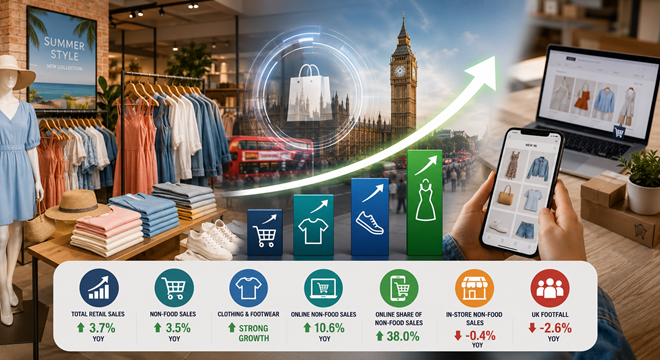
Total retail sales rose 3.7% year-on-year during the
four weeks to 30 May, significantly stronger than the 1.0% growth recorded a
year earlier and above the 12-month average of 2.0%. Non-food sales increased
by 3.5%, reversing the 1.1% decline seen in May 2025 and indicating that
consumers are once again willing to spend on discretionary purchases.
For the fashion industry, the biggest bright spot was
the return of growth in clothing and footwear sales. A late spring heatwave
prompted shoppers to update their wardrobes with summer essentials, giving the
category one of its strongest performances since the January sales period.
Summer holidays and the upcoming World Cup could provide additional support for
spending in the months ahead.
However, this recovery is unfolding with caution.
Online shopping continued to gain momentum. Online
non-food sales surged 10.6%, compared with a 1.5% decline a year earlier, while
the share of non-food purchases made online rose to 38.0% from 36.0%. At the
same time, in-store non-food sales edged down 0.4%, highlighting consumers'
growing preference for digital channels.
Footfall data painted a similarly mixed picture. Total
UK footfall declined by 2.6% year-on-year in May, although this was a marked
improvement from April's 10.7% drop. High Streets proved the most resilient,
with footfall down 1.5%, while Shopping Centres and Retail Parks remained under
pressure. Early sunshine encouraged people out, but record temperatures later
in the month kept many shoppers away from stores.
Longer term unemployment risk
At the same time, a longer-term risk is beginning to
emerge. More than 80 major UK retail leaders have warned that rising employment
costs could worsen youth unemployment. An interim report led by Alan Milburn
estimates that as many as 1.25 million people under the age of 25 could be
unemployed within the next five years.
For exporters, this is an important signal. UK demand is
improving and apparel spending has returned to growth, but the recovery remains
fragile. If youth unemployment rises and household finances remain strained,
weaker consumer confidence could eventually slow spending, dampen economic
growth and curb future demand for fashion and other discretionary products.
For exporters, this is an important signal. UK demand is improving and apparel spending has returned to growth, but the recovery remains fragile. If youth unemployment rises and household finances remain strained, weaker consumer confidence could eventually slow spending, dampen economic growth and curb future demand for fashion and other discretionary products.
Subscribe To Textile Excellence Print Edition
If you wish to Subscribe to Textile Excellence Print Edition, kindly fill in the below form and we shall get back to you with details.
Newsletter
Subscribe To Textile Excellence Mailing List


- December 09, 2022
'There Is Very High Acceptance For India

- December 09, 2022
'Advanced Machines & Service, Customer C

- October 09, 2023
First-time In The World: Rieter’s Auto

- July 28, 2026
Arvind Eyes Leadership In India's Premiu

- June 01, 2020
Karl Mayer Enables Automated Production

- June 05, 2023
Ultimax - All New Revolutionary Rapier W
- June 09, 2025
DyStar Becomes A Wholly Owned Subsidiary

- July 28, 2026