
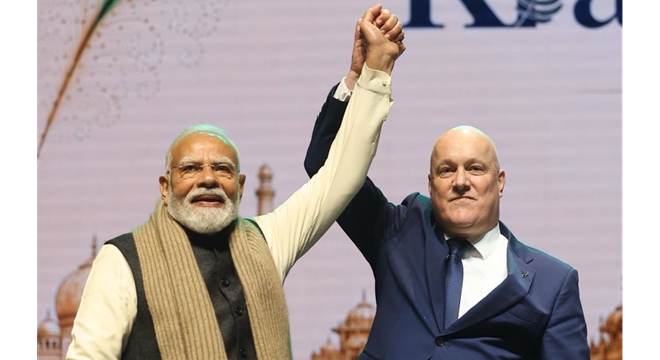
India-New Zealand FTA Opens US$ 2 Billion Textile Opportunity For Indian Exporters
India’s textile and apparel
exporters are set to gain a new market opportunity as the India-New Zealand
Free Trade Agreement (FTA) moves towards implementation, opening doors for
higher exports, investment and supply chain partnerships.
Prime Minister Narendra
Modi said the landmark agreement will add “depth and dynamism” to bilateral
economic ties by improving market access, boosting investment, expanding
services and enabling greater talent mobility.
For the textile industry,
New Zealand represents a small but attractive opportunity. With a population of
around 5 million, the country is highly dependent on imports for its clothing
and textile requirements. Its textile and apparel import market is estimated at
around US$ 2 billion annually, with apparel accounting for nearly 65% of
imports.
New Zealand’s apparel
imports alone are valued at around US$ 1.2 billion, covering products such as
knitwear, casual wear, jackets, sportswear, formal clothing and home textiles.
However, India currently
has only a limited presence in this market. Indian textile and apparel exports
to New Zealand are estimated at around US$ 100 million, highlighting
significant room for expansion.
China leads, India has room
to grow
China remains the largest
supplier of textiles and clothing to New Zealand, dominating categories such as
T-shirts, knitwear, sweaters, jackets and casual apparel. Bangladesh has also
built a strong position, particularly in basic garments and knitwear.
In comparison, India’s
share remains relatively small despite its strengths in cotton textiles,
garments and sustainable manufacturing.
The FTA could create fresh
opportunities for Indian exporters in:
-Ready-made garments, particularly
cotton apparel, knitwear and woven products
-Home textiles such as bed linen, towels
and curtains
-Sustainable and recycled textile
products
-Cotton-based value-added products
-Wool blends and premium textiles by
leveraging New Zealand’s strong wool ecosystem
Strategic partnership gets
bigger push
Addressing business leaders
in Auckland, PM Modi highlighted India’s economic growth, skilled workforce,
digital ecosystem and infrastructure expansion as major opportunities for New
Zealand companies.
The two countries have
upgraded relations to a Strategic Partnership and set a target of doubling
bilateral trade to NZD 7 billion (around ₹35,000 crore) by 2030.
New Zealand has also
committed to investing US$ 20 billion in India over the next 15 years,
strengthening opportunities for collaboration across manufacturing, technology
and infrastructure.
PM Modi invited New Zealand
businesses to partner with India in areas including logistics, clean energy,
digital economy and innovation.
For India’s textile sector,
the agreement comes at a crucial time as exporters seek new markets and
diversified supply chains. With global buyers increasingly looking for
reliable, sustainable and transparent sourcing partners, the India-New Zealand
FTA could help Indian manufacturers expand their footprint in a market where
China and Bangladesh currently dominate.
The opportunity is clear:
New Zealand may be a small market, but its nearly US$ 2 billion textile import
demand offers significant headroom for India’s exporters.
Prime Minister Narendra Modi said the landmark agreement will add “depth and dynamism” to bilateral economic ties by improving market access, boosting investment, expanding services and enabling greater talent mobility. For the textile industry, New Zealand represents a small but attractive opportunity. With a population of around 5 million, the country is highly dependent on imports for its clothing and textile requirements. Its textile and apparel import market is estimated at around US$ 2 billion annually, with apparel accounting for nearly 65% of imports. New Zealand’s apparel imports alone are valued at around US$ 1.2 billion, covering products such as knitwear, casual wear, jackets, sportswear, formal clothing and home textiles.
Subscribe To Textile Excellence Print Edition
If you wish to Subscribe to Textile Excellence Print Edition, kindly fill in the below form and we shall get back to you with details.
Newsletter
Subscribe To Textile Excellence Mailing List


- December 09, 2022
'There Is Very High Acceptance For India

- December 09, 2022
'Advanced Machines & Service, Customer C

- October 09, 2023
First-time In The World: Rieter’s Auto

- July 28, 2026
Arvind Eyes Leadership In India's Premiu

- June 01, 2020
Karl Mayer Enables Automated Production

- June 05, 2023
Ultimax - All New Revolutionary Rapier W
- June 09, 2025
DyStar Becomes A Wholly Owned Subsidiary

- July 28, 2026