
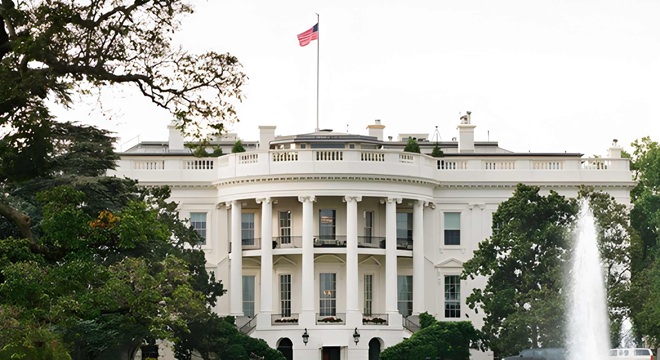
US Cracks Down On Transshipments
The US has fired a fresh
warning shot across global supply chains: routing goods through a third country
to escape American tariffs is coming under much tougher scrutiny.
A new White House report, The
Great Transshipment Scam: Rise, Scope, and Costs, accuses more than 40
countries of being part of a China-linked network that allegedly helps tariffed
Chinese goods reach the US through alternative routes. India is among them. But
the report is important for another reason: it lays out how Washington plans to
hunt down such trade flows - and the measures could affect exporters,
manufacturers and sourcing hubs far beyond China.
The White House estimates
that potential illegal transshipment could be worth around US$ 60 billion
annually, using the midpoint of estimates from the Council of Economic
Advisers. Other estimates cited range from US$ 40 billion to as much as US$ 303
billion, depending on the definition and methodology. The report says the
central US estimate translates into potentially tens of billions of dollars in
lost tariff revenue.
The basic allegation is
straightforward. Chinese goods facing high US tariffs are allegedly being
routed through lower-tariff countries where they may be repackaged, relabelled,
lightly processed, re-invoiced or otherwise presented as originating somewhere
else. The White House stresses, however, that the shift in trade does not prove
that all increased exports from third countries are illegal transshipment; some
represent genuine investment and production relocation.
India is on the list
India is classified as a
Tier 1 “Diversified Scale Leader”, alongside Canada, the EU, Israel, Japan,
Mexico, South Korea and Taiwan. The report says these economies handle large
volumes of China-linked goods while having sizeable industrial bases and major
US-bound export platforms.
That classification
matters. It does not say India is illegally transshipping goods across the
board. Rather, Washington considers India a significant node where legitimate
manufacturing and possible origin-shifting activity can coexist.
The report even identifies
an India-specific corridor: Pune-Gujarat-Chennai, linking it to US imports of
pumps and compressors under HS codes 8413 and 8414. The White House maps these
imports against manufacturing centres in Cincinnati, Dayton and Columbus,
arguing that such flows can put corresponding US production under pressure.
Indian exporters
increasingly relying on China-linked inputs, processing arrangements or complex
multi-country supply chains can expect much deeper scrutiny of origin,
ownership, production capacity and shipment histories.
What will Washington do?
This is where the report
becomes more than a warning.
First comes AI-powered
customs enforcement. The White House describes a developing system called
“Detective Border”, designed to combine shipment data, routing histories,
product classifications, ownership links, production-capacity information,
anomaly detection and computer vision. The system is intended to flag
suspicious shipments before or as they enter the US.
In practical terms, US
customs wants to compare what a shipment says on paper with what the global
trade data suggests should be possible.
A factory claiming to
export millions of dollars of a product, for example, could be assessed against
its known production capacity, imports of raw materials, ownership links,
shipping routes and previous trade patterns. Computer-vision tools could also examine
container markings, packaging and X-ray images for inconsistencies.
Then comes tougher
enforcement.
The White House says
countries or companies involved in relabelling or rerouting tariffed goods to
evade US law could face interdiction, penalty tariffs, sanctions and
potentially loss of market access.
The rules are getting
tighter
President Trump’s June 3,
2026 Executive Order on Strengthening Customs Enforcement is described as the
institutional backbone of this effort.
The order strengthens
importer-of-record requirements, bonding and domestic-asset requirements,
ownership and business-affiliation disclosures, good-standing requirements,
penalties and customs transparency. The stated aim is to make it harder for
shell companies, opaque ownership structures and under-bonded importers to
exploit weaknesses in the system.
The US is also embedding
stronger rules of origin into its Reciprocal Trade Agreements. The White House
says these provisions allow signatories to establish rules needed to prevent
agreement benefits from flowing substantially to third countries through illegal
transshipment.
That could become
particularly significant for countries that are building their export
strategies around China+1 manufacturing.
A new test For near-shoring
Here lies the interesting
twist.
Washington says it wants to
distinguish real manufacturing relocation from tariff arbitrage. A genuine
factory investment that uses Chinese machinery or raw materials is not
automatically illegal transshipment. The challenge is proving that sufficient
economic transformation actually occurs in the third country. The proposed AI
system is explicitly designed to make that distinction.
That means simply moving
final assembly to India, Vietnam, Bangladesh, Mexico or another country will
not necessarily be enough if the US believes the underlying economic origin
remains elsewhere.
This matters enormously for
textiles.
As apparel and textile
sourcing becomes more geographically diversified, brands are increasingly
buying from factories that operate across multiple countries and source yarn,
fabric, trims, machinery and chemicals internationally. The more complicated the
chain, the more important documentation, traceability and proof of origin
become.
India should take notice
The White House report does
not announce a new India-specific tariff or penalty. India is listed in the
highest-risk group, but the report does not accuse the Indian government itself
of facilitating illegal transshipment or prescribe a special action against
India.
The risk is nevertheless
real.
For Indian exporters, the
direction of travel is unmistakable: US customs is moving from checking
documents to checking the entire supply chain behind those documents. Production
capacity, ownership, inputs, routing, invoices, certificates of origin and
shipment patterns could all become part of the scrutiny.
That could hurt companies
engaged in genuine manufacturing if their documentation is weak. But it could
also benefit India in the long run if the country can demonstrate genuine value
addition and transparent supply chains.
The US itself admits that
it is too early to know whether the new measures will work. Several provisions
remain under implementation, and the administration says future trade and
customs data will be needed to assess whether transshipment, tariff losses and
economic damage actually decline.
For global manufacturers,
however, the warning is already clear.
The US is not just raising
tariffs anymore. It is building a system to track where goods really come from.
And for every country hoping to capture manufacturing displaced from China,
that distinction is about to matter a lot more.
The US itself admits that it is too early to know whether the new measures will work. Several provisions remain under implementation, and the administration says future trade and customs data will be needed to assess whether transshipment, tariff losses and economic damage actually decline. For global manufacturers, however, the warning is already clear. The US is not just raising tariffs anymore. It is building a system to track where goods really come from. And for every country hoping to capture manufacturing displaced from China, that distinction is about to matter a lot more.
Subscribe To Textile Excellence Print Edition
If you wish to Subscribe to Textile Excellence Print Edition, kindly fill in the below form and we shall get back to you with details.
Newsletter
Subscribe To Textile Excellence Mailing List


- December 09, 2022
'There Is Very High Acceptance For India

- December 09, 2022
'Advanced Machines & Service, Customer C

- October 09, 2023
First-time In The World: Rieter’s Auto

- July 28, 2026
Arvind Eyes Leadership In India's Premiu

- June 01, 2020
Karl Mayer Enables Automated Production

- June 05, 2023
Ultimax - All New Revolutionary Rapier W
- June 09, 2025
DyStar Becomes A Wholly Owned Subsidiary

- July 28, 2026