
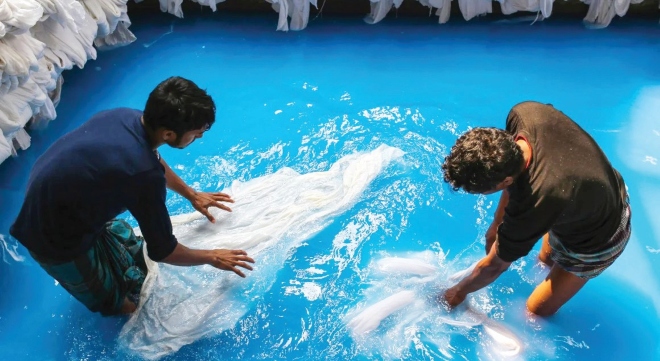
How Dyeing Units Are Wrecking Delhi’s Water
Hundreds
of illegal textile dyeing units across Delhi are quietly bleeding the city’s
groundwater and dumping toxic waste into its drains, unchecked, unregulated and
in plain sight. According to reports, each unit consumes between 200,000 and
500,000 litres of groundwater every single day, drawn through illegal
borewells. Together, they are estimated to siphon off nearly 100 million litres
of water daily - clean groundwater that Delhi can ill afford to lose.
These
units operate outside the law, yet continue to function openly in residential
and mixed-use areas such as Bindapur, Matiala, Khyala, Sarita Vihar and
Seelampur. Because they cannot obtain legal water connections, operators rely
entirely on illegal borewells, accelerating groundwater depletion in already
water-stressed zones.
The
environmental damage goes far beyond water theft. The textile dyeing industry
is classified as a “red-category” industry, indicating severe pollution
potential. Under Indian law, such operations require approvals under the Water
(Prevention and Control of Pollution) Act, 1974, the Air (Prevention and
Control of Pollution) Act, 1981, and hazardous waste management rules. In
reality, these safeguards are routinely ignored.
Chemical-laden
wastewater from dyeing and washing processes is discharged without any
treatment into stormwater drains. These drains eventually flow into the Yamuna,
turning the river into a dumping ground for industrial effluents. The result is
visible contamination of local drains, roads and open spaces, with coloured
wastewater staining neighbourhoods long before it reaches the river.
In
Seelampur, dozens of such units operate in full view. Fabrics dyed in deep
blues, blacks and indigos are dried on rooftops, while untreated effluents flow
below. Residents say local drains have become permanently polluted, emitting
foul odours and staining streets. Despite repeated complaints, enforcement
remains weak.
Various
reports have surfaced about the spread of illegal dyeing units across the
country, yet the problem has only deepened. The scale of daily water extraction
and pollution suggests not isolated violations, but a systemic failure of
oversight.
As
Delhi struggles with falling groundwater levels and a dying river, these
illegal dyeing units represent a silent but relentless assault on the city’s
water security and environment, one that continues not in the shadows, but in
plain sight.
The environmental damage goes far beyond water theft. The textile dyeing industry is classified as a “red-category” industry, indicating severe pollution potential. Under Indian law, such operations require approvals under the Water (Prevention and Control of Pollution) Act, 1974, the Air (Prevention and Control of Pollution) Act, 1981, and hazardous waste management rules. In reality, these safeguards are routinely ignored.
Subscribe To Textile Excellence Print Edition
If you wish to Subscribe to Textile Excellence Print Edition, kindly fill in the below form and we shall get back to you with details.
Newsletter
Subscribe To Textile Excellence Mailing List


- December 09, 2022
'There Is Very High Acceptance For India

- December 09, 2022
'Advanced Machines & Service, Customer C

- October 09, 2023
First-time In The World: Rieter’s Auto

- July 28, 2026
Arvind Eyes Leadership In India's Premiu

- June 01, 2020
Karl Mayer Enables Automated Production

- June 05, 2023
Ultimax - All New Revolutionary Rapier W
- June 09, 2025
DyStar Becomes A Wholly Owned Subsidiary

- July 28, 2026