
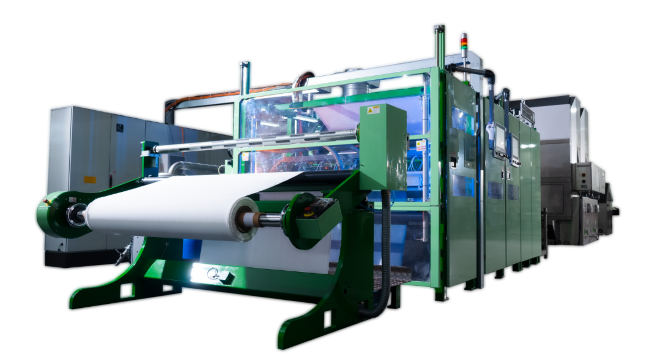
Alchemie And Acatel Partner To Scale Low Carbon Jet Precision Dyeing Technology
Alchemie Technology has entered a strategic partnership with
Acatel, Portugal’s leading sustainable textile manufacturer, to accelerate the
industrial adoption of next generation dyeing solutions for knitted cellulosic
fabrics. The collaboration brings together digital innovation and manufacturing
expertise at a time when the textile industry faces mounting pressure to cut
emissions, water use, and chemical discharge.
The partnership will run a structured 12-month research and
development programme based at the Acatel Innovation Hub. The initiative
focuses on validating Alchemie’s fully electric jet precision dyeing technology
for large scale production. The system is designed to replace conventional
dyeing and finishing routes while improving fabric consistency, production
efficiency, and quality across cotton, linen, MMCF, hemp, and wool blend
applications.
Textile dyeing remains one of the most resource intensive
industrial processes globally. Industry data shows the sector contributes close
to 3% of global CO2 emissions and represents the second largest source of
industrial wastewater pollution. Projections indicate dyeing alone could
account for 10% of global CO2 emissions by 2050 if current consumption trends
continue.
Alchemie’s digital dyeing platform addresses these
challenges directly. The company reports energy and CO2 reductions of up to
85%, water savings reaching 95%, and chemistry savings of up to 30% compared to
traditional dyeing processes. These performance gains position the technology
as a commercially viable pathway to low carbon textile manufacturing.
The collaboration will be showcased at Paris Première Vision
from February 3 to 5, 2026, where both partners will present fabric samples
demonstrating performance, touch, and sustainability outcomes. The partnership
underscores growing momentum across Europe toward scalable, low impact textile
processing solutions.

Textile dyeing remains one of the most resource intensive industrial processes globally. Industry data shows the sector contributes close to 3% of global CO2 emissions and represents the second largest source of industrial wastewater pollution. Projections indicate dyeing alone could account for 10% of global CO2 emissions by 2050 if current consumption trends continue.
Subscribe To Textile Excellence Print Edition
If you wish to Subscribe to Textile Excellence Print Edition, kindly fill in the below form and we shall get back to you with details.
Newsletter
Subscribe To Textile Excellence Mailing List


- December 09, 2022
'There Is Very High Acceptance For India

- December 09, 2022
'Advanced Machines & Service, Customer C

- October 09, 2023
First-time In The World: Rieter’s Auto
- July 28, 2026
Arvind Eyes Leadership In India's Premiu

- June 01, 2020
Karl Mayer Enables Automated Production

- June 05, 2023
Ultimax - All New Revolutionary Rapier W
- June 09, 2025
DyStar Becomes A Wholly Owned Subsidiary

- July 28, 2026