
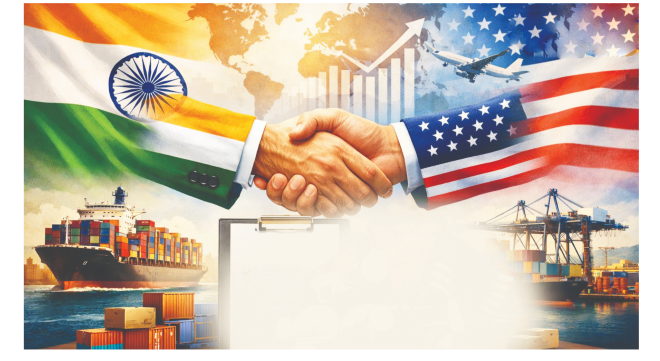
When 18% Feels Like A Victory
You have to hand it to the Americans. They know how to sell a story.
In a span of months, they converted a blunt tariff
escalation into a diplomatic “win” the world was expected to applaud.
India’s textiles and apparel going into the US were paying
just 2–3.5% duty before the tariff theatrics. Then suddenly, tariffs jumped to
25%. Then 50%. There was even talk of 500% on imports from India. Nobody really
believed 500%. But 25% and 50% were real enough to trigger emergency calls
between Indian exporters and US brands.
US buyers - structurally allergic to cost absorption - pushed
back. Indian exporters, already operating on razor-thin margins (or so we are
told), recalibrated pricing, shaved margins further, and attempted to stay
relevant. All this while watching competitors in South Asia enjoy lower
tariffs. Turkey sat comfortably at 10%.
Then came the twist.
After India signed its trade agreement with the European
Union, the US President publicly expressed displeasure. The much-anticipated
India-US trade deal - supposedly months away - materialised overnight. Tariffs
were “slashed” to 18%. Cue celebration.
But 18% is not 3.5%.
A 14.5 percentage point hike over earlier effective rates is
not cosmetic. It is structural. It alters costing models, renegotiates risk
allocation, and permanently shifts bargaining power within the supply chain.
Yet the mood turned jubilant.
Why?
Are margins not as wafer-thin as industry bodies routinely
claim? If exporters could theoretically survive 25%, and are now relieved at
18%, were they prepared to absorb most of the delta? US buyers, if at all they
agree to take on some of the tariff burden, have the freedom to quietly pass on
the higher prices to consumers, enhancing their own margins amid widespread
brand and store closures.
If exporters are genuinely relieved, the arithmetic demands
scrutiny.
Why have no major textile and apparel associations issued a
sober analysis of the long-term impact of an 18% regime? Why frame it as
“industry secured” rather than “cost base permanently reset”?
Then comes the predictable panic over Bangladesh receiving
zero duty on apparel made from US cotton. Before the current tariff theatrics,
Bangladesh was already sourcing significant volumes of cotton from Brazil and India.
The assumption that Dhaka will suddenly pivot wholesale to US cotton is
strategically naïve. Even if it does, increased domestic cotton availability in
India should theoretically ease prices. Demand–supply fundamentals have not
been suspended.
Yes, Indian export supply chains are deeply US-centric. But
markets evolve. Concentration risk is a choice.
What’s remarkable is not that the US raised tariffs. It’s
that it raised them to levels where exporters absorb most of the pain - and
then successfully reframed partial moderation as generosity.
Low-duty Chinese inflows are curtailed. Competitive
landscapes are redrawn. US retailers regain pricing leverage.
And the global supplier base applauds an 18% tariff as
relief.
That’s not just trade policy.
That’s positioning.
And we still call it free and / or fair trade?
Yes, Indian export supply chains are deeply US-centric. But markets evolve. Concentration risk is a choice. What’s remarkable is not that the US raised tariffs. It’s that it raised them to levels where exporters absorb most of the pain - and then successfully reframed partial moderation as generosity. Low-duty Chinese inflows are curtailed. Competitive landscapes are redrawn. US retailers regain pricing leverage. And the global supplier base applauds an 18% tariff as relief. That’s not just trade policy.
Subscribe To Textile Excellence Print Edition
If you wish to Subscribe to Textile Excellence Print Edition, kindly fill in the below form and we shall get back to you with details.
Newsletter
Subscribe To Textile Excellence Mailing List


- December 09, 2022
'There Is Very High Acceptance For India

- December 09, 2022
'Advanced Machines & Service, Customer C

- October 09, 2023
First-time In The World: Rieter’s Auto

- July 28, 2026
Arvind Eyes Leadership In India's Premiu

- June 01, 2020
Karl Mayer Enables Automated Production

- June 05, 2023
Ultimax - All New Revolutionary Rapier W

- June 09, 2025
DyStar Becomes A Wholly Owned Subsidiary
- July 28, 2026