
New US Senate Bill Targets First Sale Rule: Trade Cost Shock Or Compliance Reset?
On 12 February 2026, US Senators Bill Cassidy
(Republican–Louisiana) and Sheldon Whitehouse (Democrat–Rhode Island)
introduced legislation that would eliminate the long-standing “first sale rule”
in US customs valuation. If enacted, the measure would mark a fundamental shift
in import valuation policy, overturning nearly four decades of judicial
precedent and established commercial practice.
What Is the First Sale Rule?
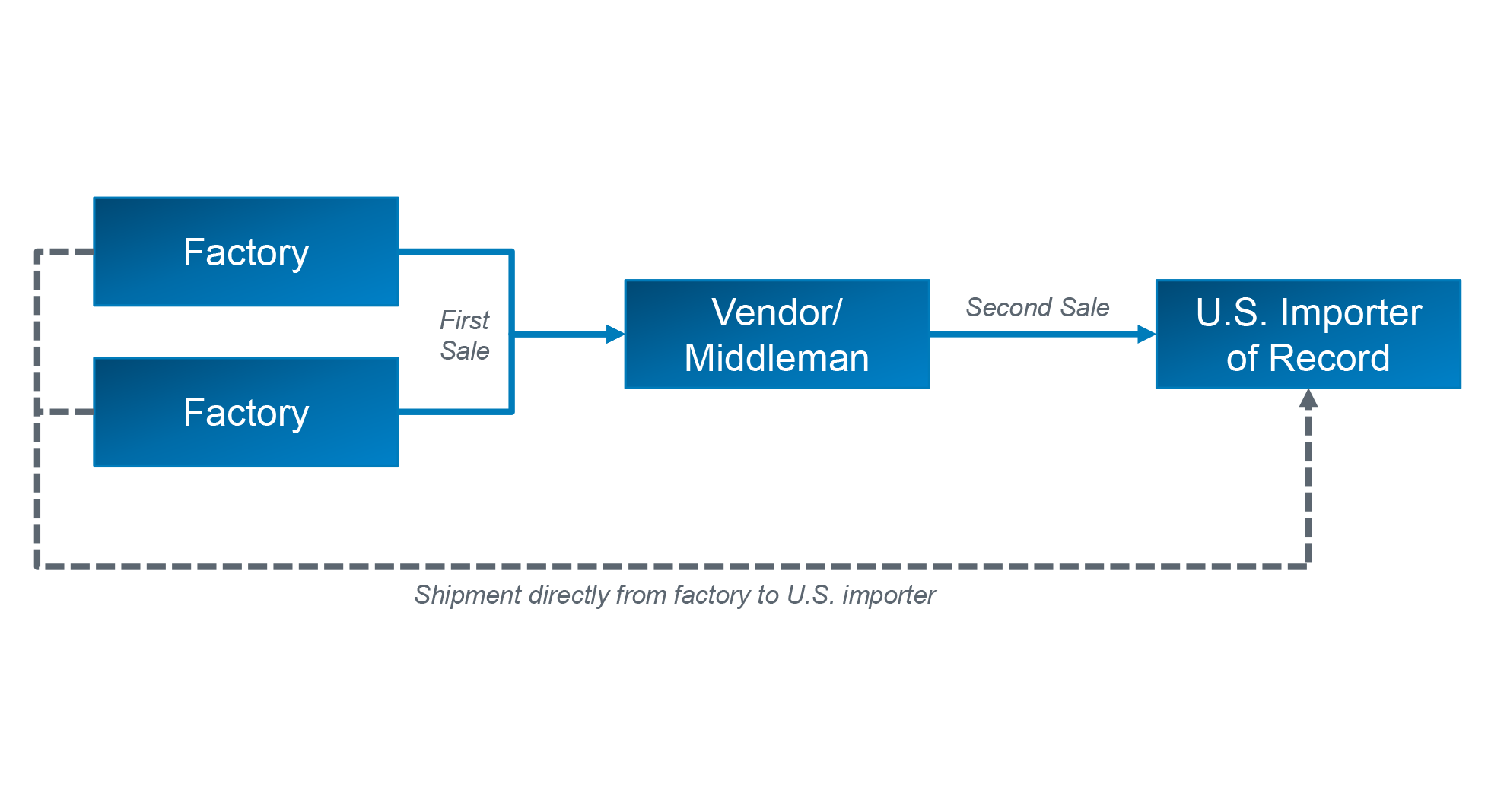
Under current U.S. customs law, importers may declare the
dutiable value of goods based on the price paid in the first bona fide sale in
a multi-tiered transaction, typically the sale between a manufacturer and a
middleman, rather than the higher price paid by the US buyer to the
intermediary.
The doctrine was established through litigation led by
Sandler, Travis & Rosenberg in the late 1980s and later reaffirmed by
Congress in 2008. Over time, it has become a mainstream cost-management
mechanism for US importers operating within complex global supply chains.
What the new bill proposes
The proposed legislation would amend the customs valuation
statute to require that imported goods be appraised based on the “price paid or
payable by the buyer in the United States for the merchandise in the last sale
that introduces the merchandise into the United States.”
In effect, this would mandate “last sale” valuation across
the board. For multi-tiered sourcing structures, common in apparel,
electronics, footwear, and consumer goods, the dutiable base would shift upward
to the highest transactional value prior to US entry.
Economic and trade implications
1. Direct cost increases
Eliminating first sale would increase the customs value of
many imported goods, thereby raising duty liability.
At a time when tariff volatility and supply chain
reconfiguration have constrained traditional cost-optimisation levers, this
change would remove one of the few remaining lawful valuation efficiencies
available to importers.
2. Inflationary pressures
Higher landed costs are likely to be passed through the
supply chain. In sectors such as apparel and consumer goods, where margins are
thin and price sensitivity is high, the result could be upward pressure on
retail pricing.
3. Competitive rebalancing
Smaller importers that lack multi-tiered sourcing structures
may see less relative impact. Larger multinational sourcing networks, which
rely heavily on intermediary structures for operational efficiency, would face
disproportionately higher exposure.
4. Supply chain transparency trade-off
Proponents of first sale argue that its structured
compliance requirements, particularly documentation standards mandated by U.S.
Customs and Border Protection, drive deeper visibility into upstream supply
chains. In practice, companies using first sale must map transactional flows
precisely, which can strengthen compliance with forced labour regulations and
other trade enforcement measures.
Eliminating the rule may simplify valuation from a
regulatory perspective but could reduce incentives for granular upstream
transparency.
Legal and policy significance
The first sale doctrine represents nearly 40 years of
judicially affirmed interpretation under U.S. customs valuation principles
aligned with WTO standards. Removing it would signal a broader policy pivot
toward revenue maximization and potentially protectionist valuation
methodology.
It would also represent a rare instance of Congress
reversing a long-standing, compliance-validated customs practice that has been
embedded in importer systems, transfer pricing models, and ERP frameworks for
decades.
Strategic considerations for importers
If the legislation advances, companies will need to:
-
Model duty exposure under last-sale-only
valuation
-
Reassess sourcing structures and intermediary
relationships
-
Evaluate transfer pricing alignment with customs
valuation
-
Strengthen landed cost forecasting and pricing
strategies
For sectors with heavy reliance on Asian manufacturing hubs,
the financial implications could be immediate and material.
The proposed elimination of the first sale rule is more than
a technical customs amendment, it is a structural recalibration of how the
United States values imports.
In an era defined by tariff escalation, geopolitical
realignment, and compliance intensification, the bill would remove a
long-standing cost mitigation mechanism and shift the balance toward higher
effective duty burdens.
Whether framed as revenue reform or trade tightening, the
outcome - if enacted - would reshape import economics across multiple
industries.
Not surprisingly, the proposed elimination is finding favour
with US textile and apparel industry.
NCTO backs Senate bill to end ‘first sale’ rule in US
imports
The National Council of Textile Organizations (NCTO) has
announced its support for the Last Sale Valuation Act, legislation.
NCTO president and CEO Kim Glas said: “NCTO and the US
textile industry strongly support the Last Sale Valuation Act, a bill that
would eliminate a harmful CBP rule that significantly lowers duties paid by
importers on textile and apparel goods and disadvantages US textile
manufacturers in favour of countries that often employ predatory trade
practices and fail to provide reciprocal market access.
“We sincerely thank Sens. Bill Cassidy (R-LA) and Sheldon
Whitehouse (D-RI) for their leadership on this bill. Closing this loophole will
help level the playing field, bolster the US textile industry, and spur more
onshoring and investment here and in our Western Hemisphere.”
Besides NCTO, the legislation has received endorsements from
the Rhode Island Textile Innovation Network, Rethink Trade, and Coalition for a
Prosperous America.
The Last Sale Valuation Act aims to ensure that duty
assessments reflect the actual transaction between foreign sellers and US
importers before goods enter US markets. Supporters believe this adjustment
would create more equitable conditions for small businesses and domestic
producers.
NCTO president and CEO Kim Glas said: “NCTO and the US textile industry strongly support the Last Sale Valuation Act, a bill that would eliminate a harmful CBP rule that significantly lowers duties paid by importers on textile and apparel goods and disadvantages US textile manufacturers in favour of countries that often employ predatory trade practices and fail to provide reciprocal market access.
Subscribe To Textile Excellence Print Edition
If you wish to Subscribe to Textile Excellence Print Edition, kindly fill in the below form and we shall get back to you with details.
Newsletter
Subscribe To Textile Excellence Mailing List


- December 09, 2022
'There Is Very High Acceptance For India

- December 09, 2022
'Advanced Machines & Service, Customer C

- October 09, 2023
First-time In The World: Rieter’s Auto

- July 28, 2026
Arvind Eyes Leadership In India's Premiu

- June 01, 2020
Karl Mayer Enables Automated Production

- June 05, 2023
Ultimax - All New Revolutionary Rapier W
- June 09, 2025
DyStar Becomes A Wholly Owned Subsidiary

- July 28, 2026