
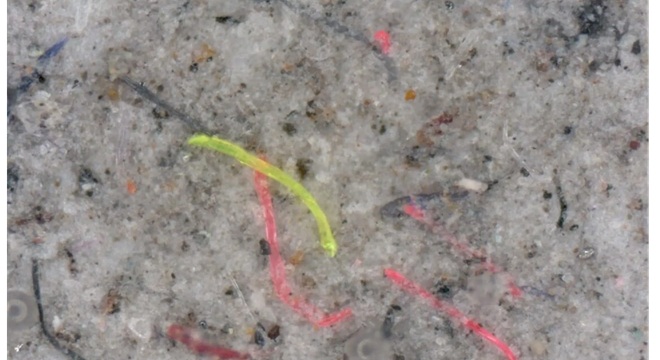
Textile Filter Takes Aim At Microplastics
German researchers have
developed a textile-based cascade filter that could stop microplastic
pollution.
Scientists at the German
Institutes of Textile and Fiber Research Denkendorf (DITF) have developed a
three-stage filter capable of removing 89.7% to 98.5% of microplastic particles
from wastewater.
The system uses specially
engineered 3D textile composite structures made from polypropylene fabric and
spacer layers. Wastewater passes through progressively finer pores, allowing
the filter to capture particles as small as 1.5 micrometres.
The technology has already
been tested in both an industrial laundry and a municipal wastewater treatment
plant.
And there is another clever
feature.
As fibres accumulate, they
form a “filter cake” that actually improves filtration. A compressed-air
backwashing system then removes the buildup. According to the researchers, this
extends operating time by 155%, reducing how frequently the filter needs cleaning.
The need is substantial.
Research cited by the team suggests that washing can release between 12 and
1,400 milligrams of microfibres per kilogram of textiles, depending on the
material and conditions.
Traditional wastewater
plants can remove much of this pollution, but their enormous water volumes mean
that even a small percentage escaping can translate into huge quantities.
The DITF approach takes the
battle closer to the source — the laundry itself.
And that could make this
more than a clever filtration technology.
As synthetic fibre use
continues to grow and pressure mounts on the textile industry to tackle
microfiber pollution, textiles may increasingly become part of the solution to
a pollution problem they helped create.
The DITF approach takes the battle closer to the source — the laundry itself. And that could make this more than a clever filtration technology. As synthetic fibre use continues to grow and pressure mounts on the textile industry to tackle microfiber pollution, textiles may increasingly become part of the solution to a pollution problem they helped create.
Subscribe To Textile Excellence Print Edition
If you wish to Subscribe to Textile Excellence Print Edition, kindly fill in the below form and we shall get back to you with details.
Newsletter
Subscribe To Textile Excellence Mailing List


- December 09, 2022
'There Is Very High Acceptance For India

- December 09, 2022
'Advanced Machines & Service, Customer C

- October 09, 2023
First-time In The World: Rieter’s Auto

- July 28, 2026
Arvind Eyes Leadership In India's Premiu

- June 01, 2020
Karl Mayer Enables Automated Production

- June 05, 2023
Ultimax - All New Revolutionary Rapier W

- June 09, 2025
DyStar Becomes A Wholly Owned Subsidiary

- July 28, 2026