
The Forgotten Wisdom Of The Loom: How Preserving Knowledge Can Bring India’s Handlooms Back To Life
For
thousands of years, a loom has been more than a tool.
It
has been a place where mathematics met imagination, where science met
creativity, where patience transformed loose fibres into stories. Every
movement of the shuttle, every arrangement of threads, every crossing of warp
and weft carried within it generations of observation, experimentation and
understanding.
Yet,
somewhere along the way, the world began seeing handloom only as a product.
A
beautiful sari. A heritage fabric. A traditional craft. A livelihood
opportunity.
But
hidden beneath the colours, patterns and textures lies something much deeper -
a vast ocean of knowledge.
And
perhaps, the future of handlooms depends not only on protecting the hands that
weave, but on protecting the wisdom that created the weave.
This
is the belief of a new generation of weaving thinkers who argue that India must
look beyond the emotional idea of “saving crafts” and rediscover weaving as a
living knowledge system.
Because
skills may disappear.
But
knowledge can evolve.
The
Loom Is Not Just A Machine. It Is A Thinking System
For
nearly a decade, our weaving initiative has been exploring handloom not merely
as a method of production but as a way of thinking.
The
idea is simple yet profound — weaving is not only about making fabric. It is
about training the mind.
The
deeper one travels into weaving, the more layers appear.
For
artists, it is a medium of expression.
For
designers, it is a language of form and colour.
For
engineers, it is a study of structures.
For
mathematicians, it is a world of patterns, grids and systems.
The
very nature of weaving creates endless possibilities because every fabric is
built through relationships between threads, spaces, repetitions and
structures.
A
simple grid can become a textile.
A
mathematical sequence can become a rhythm.
A
pattern can become a visual expression of logic.
This
hidden intelligence inside weaving is what makes it unique.
The
Sixth Grader Who Discovered Mathematics Inside A Loom
Sometimes,
the power of weaving reveals itself in unexpected places.
During
a school weaving programme, students were introduced to weaving not as a craft
lesson but as a combination of mathematics, physics, material science and
creativity.
The
exercise involved rhythm.
Students
created rhythms through clapping. Those rhythms were then translated into
colours and patterns on the loom.
One
sixth-grade student was weaving a pattern when she suddenly became upset.
When
asked what happened, she explained that her rhythm had broken while repeating
the pattern. She had realised that the sequence she had chosen created a
problem when the design joined together.
Her
solution?
Next
time, she would use an odd-number rhythm or adjust the final lines so the
pattern would continue naturally.
For
an adult observer, it was a small classroom moment.
But
for a psychologist watching the process, it was something much bigger.
The
child was not merely weaving.
She
was observing, analysing, identifying a problem and finding a solution.
She
was applying knowledge.
The
loom had become a tool for thinking.
The
Forgotten Difference Between Skill And Knowledge
This
is where the conversation around handlooms takes a dramatic turn.
India
has often focused on preserving artisans.
Protecting
communities.
Keeping
traditional techniques alive.
But
the argument is that this approach may not be enough.
Because
skills are fragile.
Skills
depend on individuals.
If
a technique remains limited to a few master artisans, it becomes vulnerable.
When those practitioners disappear, the knowledge disappears with them.
The
answer lies in transforming weaving from a skill-based activity into a
knowledge-based discipline.
“Skill
is overrated. Knowledge is never overrated.”
This
simple statement captures the entire philosophy.
A
skill is something one person can possess.
Knowledge
is something society can expand.
When
weaving becomes part of education, research and innovation, it moves beyond
preservation and enters evolution.
The
question changes from:
“How
do we save this old craft?”
to:
“How
do we allow this knowledge to create something new?”
Gandhi’s
Forgotten Message Behind The Spinning Wheel
This
idea has a fascinating connection with Mahatma Gandhi’s philosophy of spinning.
The
charkha is often remembered as a symbol of self-reliance and independence.
But
there was another deeper message.
Gandhi
believed that educated people should also spin.
Not
because they needed to earn a livelihood from it.
Not
because they would replace professional spinners.
But
because participation creates understanding.
When
educated minds engage with a craft, they bring new perspectives.
A
scientist may see material possibilities.
An
engineer may see structural patterns.
A
designer may see new forms.
A
teacher may see new methods of learning.
The
craft grows because new minds enter the conversation.
The
true purpose of spinning was not only production.
It
was connection.
It
was understanding.
It
was a way for society to participate in the knowledge behind creation.
The
American Lesson: How Knowledge Saved Weaving
The
history of weaving in America offers an important lesson.
Two
hundred years ago, hand weaving existed across the world.
But
industrialisation transformed textile production.
In
America, access to capital accelerated the shift from handlooms to power looms.
Within a few decades, hand weaving as a major production activity almost
disappeared.
At
first, industrial textiles brought efficiency and affordability.
But
something else was lost.
The
richness of structures.
The
diversity of patterns.
The
deep understanding of weaving techniques.
Later,
revival movements began.
But
interestingly, they did not attempt to fight industrialisation.
They
did not argue that machines were the enemy.
Instead,
they focused on preserving knowledge.
Weaving
guilds emerged. Their purpose was not mass production. Their purpose was
documentation, research, experimentation and learning.
They
collected weave structures. They studied techniques. They created new
possibilities. They treated weaving as knowledge. That approach allowed hand
weaving to survive in a completely different form.
Not
as competition to industry.
But
as a source of creativity and innovation.
India’s
Challenge: Moving Beyond Symbolism
India’s
handloom heritage is among the richest in the world. Every region carries
unique traditions, techniques and knowledge.
But
the danger lies in reducing this heritage only to symbols.
A
motif.
A
GI tag.
A
heritage label.
The
deeper value lies in understanding what created these traditions.
A
design is only the visible expression.
The
knowledge behind creating that design is the real treasure.
The
future of Indian handlooms depends on asking a different question:
Are
we preserving products?
Or
are we preserving the intelligence that creates them?
The
Future Belongs To What Machines Cannot Create
Interestingly,
the strongest argument for handloom may not be its past.
It
may be its future.
The
areas where handloom can survive are precisely those where industrial
production cannot easily compete.
Unique
structures.
Experimental
textiles.
Personalised
creations.
Material
innovation.
Human
imagination.
The
future of handloom is not necessarily producing more.
It
is creating what cannot be produced by machines.
That
is where its true value lies.
The
Loom As A Living Memory
A
loom carries memories.
Not
only of people who used it.
But
of generations who experimented, failed, discovered and refined.
Every
thread carries knowledge.
Every
pattern carries thought.
Every
technique carries the fingerprints of human curiosity.
Perhaps
saving handlooms does not mean keeping them frozen in time.
Perhaps
it means allowing them to breathe again.
To
enter classrooms. To enter laboratories. To enter design studios.
To
enter conversations with science and technology. Because traditions do not
survive when they are protected behind glass.
They
survive when they continue to inspire.
The
future of Indian handlooms may not lie in preserving the hands alone.
It
may lie in awakening the wisdom hidden inside those hands.
And
once that wisdom begins to flow again, the loom will not merely create fabric.
It
will create ideas.
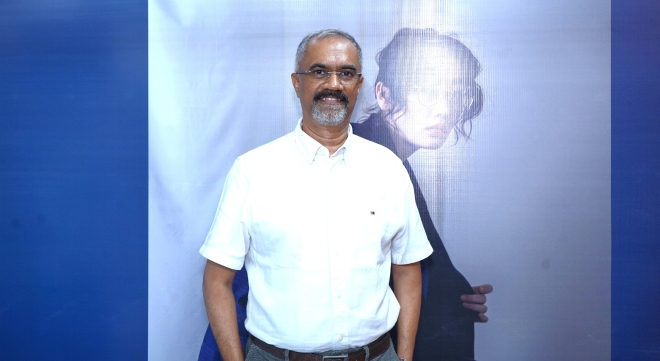
The very nature of weaving creates endless possibilities because every fabric is built through relationships between threads, spaces, repetitions and structures. A simple grid can become a textile. A mathematical sequence can become a rhythm. A pattern can become a visual expression of logic. This hidden intelligence inside weaving is what makes it unique_Naresh Ramasubramaniam, Managing Director at Shuttles & Needles
Subscribe To Textile Excellence Print Edition
If you wish to Subscribe to Textile Excellence Print Edition, kindly fill in the below form and we shall get back to you with details.
Newsletter
Subscribe To Textile Excellence Mailing List


- December 09, 2022
'There Is Very High Acceptance For India

- December 09, 2022
'Advanced Machines & Service, Customer C

- October 09, 2023
First-time In The World: Rieter’s Auto

- July 28, 2026
Arvind Eyes Leadership In India's Premiu

- June 01, 2020
Karl Mayer Enables Automated Production

- June 05, 2023
Ultimax - All New Revolutionary Rapier W

- June 09, 2025
DyStar Becomes A Wholly Owned Subsidiary

- July 28, 2026