
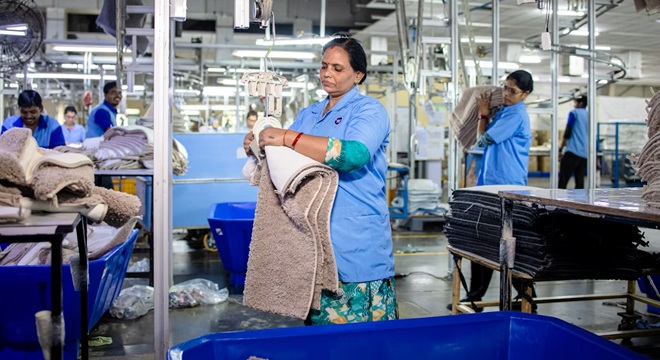
Textiles Shift Into Growth Gear
India’s
textile and apparel industry has entered FY27 with something it has been
waiting for: momentum.
A
new Wazir Advisors analysis of Q1 FY27 earnings calls shows a sector moving
beyond the defensive phase of the past two years. Spinning margins are
recovering, apparel exporters are seeing new orders, the UK-FTA is already
changing buyer behaviour, and, perhaps most importantly, the capex cycle is
back.
But
this is not a broad-based boom yet. The opportunity is real, but so are the new
pressure points.
Spinners
get their breathing room
The
sharpest turnaround is in spinning. Yarn spreads have recovered to around
$0.90/kg, compared with $0.60–0.70 during the down-cycle. Vardhman reported a
19.4% EBITDA margin, Nitin Spinners 17.8%, while RSWM’s PAT rose 2.4 times.
Management
commentary suggests a new margin normal of roughly 13–20%, depending on the
business. That changes the investment equation significantly.
And
companies are responding.
The
capex freeze is over. Nitin Spinners plans ₹1,120 crore, Vardhman has announced
₹3,660 crore, Arvind ₹450–500 crore, and Filatex ₹690 crore. But this is not a
rush to simply produce more yarn. Much of the spending is moving downstream
into fabrics, garments and higher-value products.
That
is the bigger story: India’s textile companies are trying to capture more value
from every kilogram of fibre.
UK
FTA moves from paper to factory floors
The
India-UK FTA is already showing up in order books. Implemented in July, it
removes India’s previous tariff disadvantage in the UK market.
SP
Apparels saw UK revenue jump 125% year-on-year, while Gokaldas is onboarding a
major UK customer. Pearl Global believes India’s roughly US$ 1.2–1.3 billion UK
apparel exports could double within two to three years.
And
the EU could be the much bigger second act, with implementation expected in
early-to-mid 2027.
America
is still complicated
The
US picture has improved, but not disappeared as a risk.
India
is now at MFN +10%, compared with Vietnam at +12.5%, after the additional
Section 122 tariff lapsed on July 24. Exporters are also beginning to unwind
the discounts they had offered US buyers during the tariff uncertainty.
But
the benefit will not automatically flow to margins. Companies still face wage
inflation, logistics costs and potential pressure over the refund of previously
collected US duties.
Africa
enters the race
Another
shift is happening quietly: production footprints are spreading.
Pearl
Global is expanding capacity in Bangladesh, while PDS sees opportunities to
shift sourcing towards India and duty-free Egypt. Gokaldas’ Africa business
grew 44%, helped by Kenya’s zero US duty advantage and the extension of AGOA.
The
message is clear: global apparel sourcing is becoming a portfolio game.
Companies want India—but they also want Bangladesh, Africa and other locations
in the mix.
The
new risk is execution
The
sector’s external environment is improving, but the problems have moved closer
to home.
Wage
increases, logistics costs and raw-material volatility could squeeze apparel
margins. Polyester players remain exposed to crude and West Asian disruptions.
And the enormous capex now being announced has to actually deliver.
Even
China’s yarn buying, which has provided an important boost, needs watching.
China accounts for around 30% of India’s yarn exports, but how durable that
demand will be depends partly on the relative cost of Chinese cotton.
Wazir’s
conclusion is perhaps the most important: the sector’s risk is shifting from
external shocks to internal execution.
The
market is opening. Margins are recovering. Orders are moving.
Now
India’s textile industry has to prove it can execute.
Wazir’s conclusion is perhaps the most important: the sector’s risk is shifting from external shocks to internal execution. The market is opening. Margins are recovering. Orders are moving. Now India’s textile industry has to prove it can execute.
Subscribe To Textile Excellence Print Edition
If you wish to Subscribe to Textile Excellence Print Edition, kindly fill in the below form and we shall get back to you with details.
Newsletter
Subscribe To Textile Excellence Mailing List


- December 09, 2022
'There Is Very High Acceptance For India

- December 09, 2022
'Advanced Machines & Service, Customer C

- October 09, 2023
First-time In The World: Rieter’s Auto

- July 28, 2026
Arvind Eyes Leadership In India's Premiu

- June 01, 2020
Karl Mayer Enables Automated Production

- June 05, 2023
Ultimax - All New Revolutionary Rapier W

- June 09, 2025
DyStar Becomes A Wholly Owned Subsidiary

- July 28, 2026