
Marine Algae Innovations Propel The Protective Textiles Sector Towards A Sustainable Future
The global textile industry is undergoing a profound
transformation driven by urgent environmental imperatives. Regulatory bodies
worldwide are restricting toxic perfluoroalkyl and polyfluoroalkyl substances
due to their severe ecological and health risks. These compounds accumulate in
the human body over time and have been linked to thyroid dysfunction and
fertility complications. Researchers are now developing marine algae
biopolymers to revolutionize the protective apparel segment.
The protective clothing market is forecast to reach US$ 14.5
billion by 2030. Historically, this sector depended on synthetic chemical
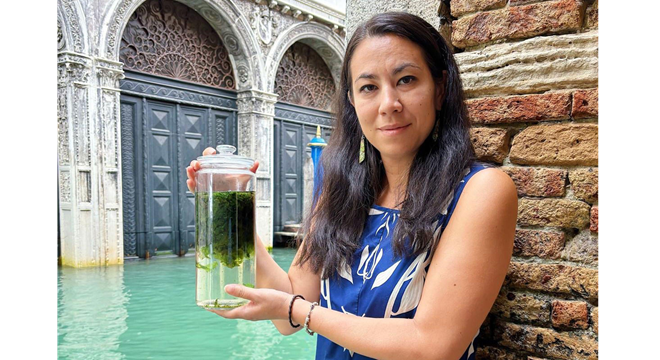
finishes to provide water repellence and flame retardance. Natasha Yamamura
founded Venice-based Algae Scope to address this dependency after witnessing
contamination in the Veneto region, where pollution levels exceeded
international safety limits by a thousand times. Algae Scope transforms
residual seaweed biomass into a natural powder additive that finishing
companies use to create fire resistant and water-repellent fabric coatings.
Yamamura stated, "We feel the urgency of bringing the
solution as soon as possible". She noted that perfluoroalkyl and
polyfluoroalkyl substances are currently utilized in approximately 50% of
clothing and home textiles. France and Denmark have already implemented bans on
these chemicals in textiles, while broader European Union restrictions are
tightening rapidly.
Seaweed presents an exceptionally viable alternative to
petroleum derivatives. Marine algae cultivate rapidly without requiring arable
land, fresh water, or synthetic fertilizers. Extracted compounds, such as
alginates and carrageenan, are engineered into robust film coatings that
deliver remarkable tensile strength and moisture resistance. Such properties
remain absolute prerequisites for medical garments, industrial workwear, and
extreme weather gear.
Innovators are scaling production to meet surging industrial
demand. Algae Scope received tailored coaching through the BlueInvest programme
in 2025 to strengthen its investor readiness. Yamamura remarked, "Our
coach Helena Vieira was an excellent mentor, I think the best we have ever had
as a startup". Vieira helped the enterprise refine its strategic
positioning ahead of major fundraising initiatives. The company subsequently
secured the Nature Positive Production Systems award at the EU Green Week 2026.
The enterprise raised €330,000 in grants and seeks a lead investor for €400,000
to finalize a €1.2 million funding round.
Life cycle assessments indicate that marine algae solutions
reduce greenhouse gas emissions by up to 70% compared to conventional petroleum
coatings. Analysts expect production expenses to plummet once automated
harvesting technologies mature. The protective textile sector stands at a
critical milestone in adopting renewable marine resources to achieve genuine
sustainability.
Life cycle assessments indicate that marine algae solutions reduce greenhouse gas emissions by up to 70% compared to conventional petroleum coatings. Analysts expect production expenses to plummet once automated harvesting technologies mature. The protective textile sector stands at a critical milestone in adopting renewable marine resources to achieve genuine sustainability.
Subscribe To Textile Excellence Print Edition
If you wish to Subscribe to Textile Excellence Print Edition, kindly fill in the below form and we shall get back to you with details.
Newsletter
Subscribe To Textile Excellence Mailing List


- December 09, 2022
'There Is Very High Acceptance For India

- December 09, 2022
'Advanced Machines & Service, Customer C

- October 09, 2023
First-time In The World: Rieter’s Auto

- July 28, 2026
Arvind Eyes Leadership In India's Premiu
- June 01, 2020
Karl Mayer Enables Automated Production

- June 05, 2023
Ultimax - All New Revolutionary Rapier W
- June 09, 2025
DyStar Becomes A Wholly Owned Subsidiary

- July 28, 2026