
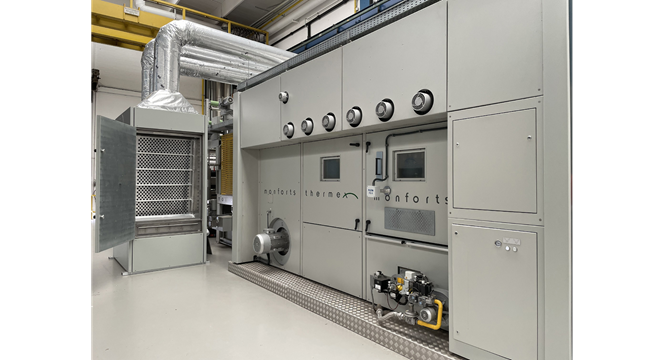
Monforts Advanced Technology Center : Where Textile Ideas Get Their Factory Test
What
happens when a promising textile idea leaves the laboratory and meets a real
production line?
At
the Monforts Advanced Technology Centre (ATC) in Mönchengladbach, Germany,
customers can find out before putting their own production at risk.
Originally
opened in 2013 and subsequently expanded, the 1,200 sq m ATC houses two full
MONTEX finishing lines, a THERMEX continuous dyeing line for denim and woven
fabrics, a complete colour kitchen and several laboratory-scale systems.
The
idea is simple: bring your own fabric, test it on industrial machinery, find
the right process and take the results back to the mill.
“The
ATC allows our customers to test their own textiles and technical fabrics on
Monforts dyeing and finishing machines under fully confidential, real
production conditions,” says Nicole Croonenbroek, Marketing Manager, Monforts.
And
the range of experiments is getting broader.
Technical
textiles need flexibility
One
MONTEX line is dedicated to technical textiles, a category where radically
different materials can arrive one after another.
Think
digitally printed soft signage substrates, carbon fabrics for high-performance
composites, extreme temperature filter media and flame-retardant barrier
fabrics.
“These
very different materials all require expert coating and finishing,” says
Monforts Textile Technologist Saskia Bollhöfer. The machinery therefore needs
to switch quickly between fabric formulas without wasting energy or raw
materials.
The
four-chamber horizontal-chain MONTEX stenter can operate at temperatures of up
to 320°C. It can also treat the top and bottom faces of certain materials at
different temperatures in a single pass.
That
opens up applications such as floor coverings, where the textile face and
rubber backing need different treatments, PVC flooring with chemical foams, and
blackout roller blinds with heavy backings.
The
line is also explosion-proof, allowing organic solvents and other volatile
materials to be handled under controlled conditions including specialist
pharmaceutical applications.
Spraying,
not soaking
The
latest addition is a Baldwin TexCoat G4 digital spray unit, integrated for full
customer trials and particularly suited to advanced sustainable finishing
chemistries from Archroma.
The
system precisely applies water-based chemicals such as softeners,
antimicrobials, durable water repellents and flame retardants. Combined with
MONTEX stenters, it can reduce water, chemistry and energy consumption by up to
50% compared with conventional pad application.
“The
new TexCoat installation is making an important contribution to what we can
achieve,” says Bollhöfer.
Knits
get the gentle touch
The
second MONTEX production line is designed for conventional knitwear, with a
vertical chain return.
That
matters because knitted fabrics are more elastic and need careful handling. The
MONTEX system processes them at very low, precisely controlled tension while
providing gentle, even thermal treatment.
It
also features the Eco Applicator, which replaces a conventional wet-on-wet
padder with trough-and-roller technology for more precise chemical application.
The
difference is substantial: fabric entering a stenter with a conventional padder
can carry around 60% moisture. With the Eco Applicator, that falls to 40%.
The
system can also finish one side, both sides, each side differently or even
selected areas of a fabric.
Thermex
takes on dyeing
Monforts
has almost 1,000 THERMEX hotflue dyeing systems operating in major textile
manufacturing countries, with more than 150 using its Econtrol® process.
Econtrol
fixes reactive dyes through a one-step dyeing and drying process using
controlled steam and air. The entire pad-dry process takes just two to three
minutes, at 120–130°C and 25–30% relative humidity.
The
ATC’s THERMEX line now also features the Universal Energy Tower, which recovers
heat from exhaust air and can deliver up to 25% energy savings, depending on
exhaust-air volume and operating temperature.
With
brands demanding cleaner production and regulations tightening, Monforts sees
this kind of technology becoming increasingly important.
The
real payoff – Proof before production
This
is where the ATC earns its keep.
Customers
can establish the right machine settings, temperatures, dwell times and
application parameters, and see what happens to water, energy and chemical
consumption, before making changes in
their own factories.
That
turns an interesting laboratory result into something much more valuable:
production data.
“Whether
the objective is to improve an existing process, develop an entirely new
product or evaluate the potential of a new technology, we can work with
customers from the initial trials through to the optimum production
parameters,” says Bollhöfer.
And
that may be the ATC’s biggest advantage: new ideas do not have to remain ideas.
They get a factory test.
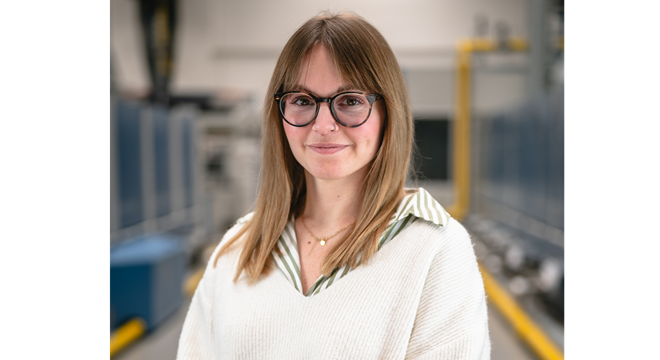
That turns an interesting laboratory result into something much more valuable: production data. “Whether the objective is to improve an existing process, develop an entirely new product or evaluate the potential of a new technology, we can work with customers from the initial trials through to the optimum production parameters,” says Monforts Textile Technologist Saskia Bollhöfer. And that may be the ATC’s biggest advantage: new ideas do not have to remain ideas. They get a factory test.
Subscribe To Textile Excellence Print Edition
If you wish to Subscribe to Textile Excellence Print Edition, kindly fill in the below form and we shall get back to you with details.
Newsletter
Subscribe To Textile Excellence Mailing List


- December 09, 2022
'There Is Very High Acceptance For India

- December 09, 2022
'Advanced Machines & Service, Customer C

- October 09, 2023
First-time In The World: Rieter’s Auto

- July 28, 2026
Arvind Eyes Leadership In India's Premiu

- June 01, 2020
Karl Mayer Enables Automated Production

- June 05, 2023
Ultimax - All New Revolutionary Rapier W
- June 09, 2025
DyStar Becomes A Wholly Owned Subsidiary

- July 28, 2026