
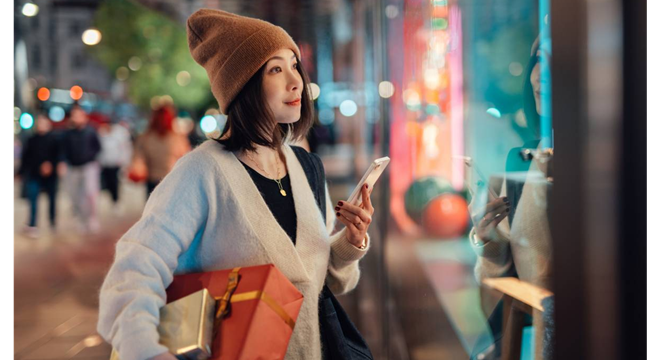
China Wants Its Huge Consumer Market To Buy Better, Greener And Smarter
China is putting its
enormous domestic consumer market through another upgrade and textiles and
apparel are firmly in the picture.
Seven government
departments, led by the Ministry of Commerce, have issued 20 measures to expand
and upgrade consumer goods consumption during the 15th Five-Year Plan period.
China wants total retail sales of consumer goods to reach around RMB 60 trillion
by 2030.
That compares with RMB
50.12 trillion in 2025, when retail sales grew 3.7%. In other words, China
wants to add roughly RMB 10 trillion to its consumer market over five years.
And textiles are
specifically named.
A trillion yuan textile
market
The Chinese government
classifies textiles and apparel among its trillion yuan retail categories,
alongside automobiles, home appliances and communications equipment. The new
policy calls for these markets to continue growing and retain their position among
the world's largest.
There is already momentum.
In 2025, retail sales of
clothes, shoes, hats and textiles by enterprises above the designated size
increased 3.2%. That was slower than some categories - sports and recreational
goods rose 15.7%, communication equipment 20.9% and household appliances 11% -
but it still represented growth in a massive market.
The first half of 2026
tells another interesting story. China's total retail sales reached RMB 24.87
trillion, up 1.3% year on year. But online retail of goods rose 4.8%, while
online clothing sales increased 6.2%.
That makes the domestic
fashion market an important part of China's consumption push.
China wants more than more
clothes
The policy is not simply
asking consumers to buy more.
For textiles and apparel,
the emphasis is on quality, design, brands and cultural value.
The government wants to
connect textile and apparel consumption with Chinese traditional culture,
protect textile-related intangible cultural heritage, develop designer brands
and regional brands with ethnic characteristics, cultivate world-class brands and
strengthen China's international fashion influence. It also wants to use
fashion weeks and other launch platforms to create more opportunities for new
products.
Silk gets its own mention.
China plans to optimise the geographical distribution of its sericulture and
silk industry and expand silk consumption.
This is significant because
the policy is effectively asking the textile industry to move up the value
chain, from volume and basic products towards design, branding, differentiation
and higher-value consumption.
The green and smart
consumer
The bigger opportunity may
lie outside conventional apparel.
By 2030, China wants to
develop RMB 10 trillion-level markets in green, smart and health-oriented
consumption.
For textiles, that creates
a natural opening for products such as recycled and lower-impact materials,
functional textiles, smart wearables, health-related textiles and other
products that combine textile technology with electronics or data.
The policy specifically
calls for greater consumption of green products, development of green supply
chains, stronger green-product certification and labelling, and wider use of
greener packaging. On the smart side, China wants to accelerate artificial intelligence
applications, smart wearable products, smart homes and other AI-enabled
consumer goods.
The direction is clear:
“green” and “smart” are being turned from technology themes into consumption
categories.
Young, old and everyone in
between
China is also targeting
consumers by age and need.
For older consumers, the
policy promotes products including smart mattresses, health-monitoring
equipment and other age-friendly technologies. For children, it calls for
greener, smarter and safer products.
For young consumers, the
focus is different: domestic “trendy” products, 3D-printed products, IP
merchandise and personalised consumption.
China also wants export
goods sold at home
One of the more interesting
elements is China's push to bring its export strengths into the domestic
market.
The government wants an
“Export Goods to China” initiative that connects high-quality export products
with domestic buyers. It plans to support dedicated retail centres, online
platforms and direct purchasing arrangements for such products.
At the same time, China
wants to expand imports of green, healthy, smart and fashionable international
consumer products, using channels including the China International Import Expo
and cross-border e-commerce.
So this is not simply a
“buy Chinese” strategy. It has two sides: upgrade domestic brands and products
while also widening the supply of selected international premium goods.
The consumption engine
needs more fuel
There is a reason Beijing
is pushing so hard on consumption.
China's retail market
reached RMB 50.12 trillion in 2025, but growth was only 3.7%. In the first half
of 2026, retail sales growth slowed to 1.3%. At the same time, services have
been growing faster than goods: service retail sales increased 5.5% in 2025.
The new measures therefore
try to attack the issue from both sides.
On supply, China wants more
R&D, better standards, stronger brands and higher quality products. On
demand, it is using measures such as consumer loan interest subsidies and
improved financial products to support spending.
There is also a major push
into lower-tier cities and rural markets, with improvements to commercial
infrastructure, e-commerce and consumption facilities intended to unlock more
demand.
What it means for textiles
For the textile industry,
this policy is less about a sudden consumption boom and more about where China
wants its next phase of textile growth to come from.
The signals are unusually
specific: stronger brands, designer products, traditional textile heritage,
silk, greener products, smarter products, specialised products for different
age groups, better standards and more premium international products.
For manufacturers, that
could mean a gradual shift away from competing only on volume and price.
For machinery and
technology suppliers, it points towards demand for technologies that help mills
and garment factories deliver better quality, traceability, functional
performance, lower environmental impact and greater product differentiation.
And for international
textile companies, China is simultaneously a gigantic manufacturing base and a
gigantic consumer market. The new policy is a reminder that the world's biggest
textile production ecosystem is also trying to become an even more
sophisticated textile consumption market.
The number to watch is RMB
60 trillion.
But for textiles, the more
interesting question is what kind of products will fill that RMB 60 trillion
market. China's answer is increasingly clear: better products, stronger brands
and more green, smart and specialised consumption.
The number to watch is RMB 60 trillion. But for textiles, the more interesting question is what kind of products will fill that RMB 60 trillion market. China's answer is increasingly clear: better products, stronger brands and more green, smart and specialised consumption.
Subscribe To Textile Excellence Print Edition
If you wish to Subscribe to Textile Excellence Print Edition, kindly fill in the below form and we shall get back to you with details.
Newsletter
Subscribe To Textile Excellence Mailing List


- December 09, 2022
'There Is Very High Acceptance For India

- December 09, 2022
'Advanced Machines & Service, Customer C

- October 09, 2023
First-time In The World: Rieter’s Auto
- July 28, 2026
Arvind Eyes Leadership In India's Premiu
- June 01, 2020
Karl Mayer Enables Automated Production

- June 05, 2023
Ultimax - All New Revolutionary Rapier W
- June 09, 2025
DyStar Becomes A Wholly Owned Subsidiary

- July 28, 2026