
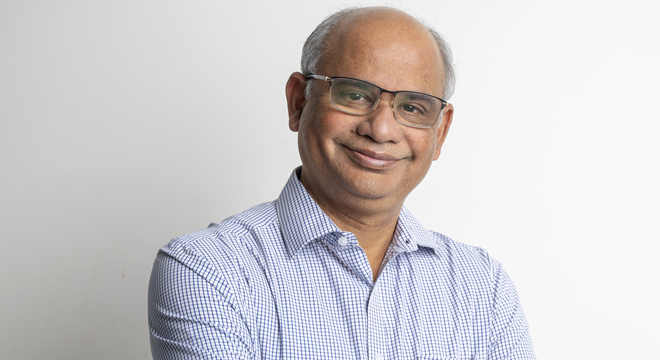
Revalyu Takes Indian PET Recycling Technology To The World
Makarand Kulkarni, CEO, Revalyu, speaks to Textile
Excellence about the company’s journey from chemical PET recycling to
commercial scale, the challenges of converting laboratory technology into
reliable industrial operations, its growing global partnerships, and the
expansion of its technology into the US. He also discusses Revalyu’s plans to
explore new PET based feedstocks and why Indian recycling technology can
compete with the world’s most demanding markets.
Revalyu has travelled a long and unusual journey. How did
the company evolve into what it is today?
Makarand Kulkarni: Revalyu’s roots go back to the
original Polygenta business, which was established in the 1980s. The business
later went through a major transformation when its promoters and investors
decided to revive the company around chemical recycling technology. The
objective was very different from conventional recycling. The company wanted to
challenge the perception that recycled polyester was inferior, inconsistent and
suitable only for low value applications. That led to the decision to develop
not only a recycling plant, but also polymer and yarn manufacturing
capabilities so that quality could be controlled across the value chain.
How difficult was it to move from laboratory scale
technology to commercial production?
Makarand Kulkarni: It was extremely challenging.
Initially, the recycled material was blended with virgin polyester at around
20%. As a pilot scale technology was being commercialised, the challenges were
enormous, however an intense team effort led to overcome all the challenges to
produce a high-quality recycled product. We started producing virgin material
around 2010, moved to recycled blending in 2011 and reached 100% recycled
production by 2013. Since 2014, we have been producing that recycled product
continuously.
How did Revalyu overcome international scepticism about
Indian polyester quality?
Makarand Kulkarni: That was another major challenge.
When I first went to Korea, I was told that Indians could make good cotton but
could not make high-quality polyester. We had to break that mindset through
product quality and consistent performance at the customer end. Eventually, we
established our products in some of the most demanding polyester markets,
including Korea and Taiwan. We supplied several hundred tonnes to Taiwan and China
for a project involving a global brand. That was an important milestone because
it demonstrated that Indian manufacturing could meet demanding international
quality requirements.
What makes chemical recycling particularly relevant for
PET?
Makarand Kulkarni: Chemical recycling allows the PET
molecule to be taken back to its basic building blocks so that a new polymer
can be produced. Revalyu’s approach is based on glycolysis and is designed to
recover material at high purity. The objective is to make recycled material
that can compete with virgin polyester in demanding applications rather than
creating a lower grade substitute. The process also provides an opportunity to
remove colours, additives and other impurities before rebuilding the material.
Revalyu is now expanding internationally. What does the
US opportunity mean for the company?
Makarand Kulkarni: The United States is extremely
important because it gives us an opportunity to demonstrate the capabilities of
Indian technology in one of the world's largest markets. Our facility in
Statesboro, Georgia, takes our proprietary chemical recycling technology closer
to major customers and waste streams in the US. We are effectively
demonstrating how Indian engineering and recycling expertise can be applied at
industrial scale to address plastic waste and convert it back into valuable
material.
Is Revalyu still primarily focused on PET bottles?
Makarand Kulkarni: PET bottles have been the core raw
material for us, and that remains an important part of our business. However,
we are now looking at how the same technological capabilities can be extended
to other PET based materials, including films and polyester textile waste. The
raw material base is highly diverse, so the technology has to evolve according
to the specific feedstock. It is a gradual process rather than something that
can happen immediately.
What are the biggest barriers preventing faster adoption
of recycling technology?
Makarand Kulkarni: Technology is only one part of the
equation. A technology cannot simply be purchased, installed and expected to
work immediately. Every country has different feedstock, infrastructure and
operating challenges. Textile waste, in particular, is much less uniform than
many other materials. Cost is another major issue. A plant can technically be
ready, but if customers are not willing to buy the output at a commercially
viable price, the investment cannot work. Scale, customer commitments, brand
participation and financial support all have to come together. It is a complex
and long-term game.
How important have global brands been in Revalyu’s
journey?
Makarand Kulkarni: Their support has been extremely
important. Decathlon supported us significantly and even provided training and
brought trainers from Europe to help develop our processes. H&M and Inditex
have also been supportive. Without the support of such customers, developing
and commercialising these technologies would be much more difficult.
What is Revalyu doing to strengthen the collection
ecosystem in India?
Makarand Kulkarni: We are working towards greater
transparency and traceability. Our collection system maps PET bottles from the
first collection point and uses geotagging to track their movement. We also
maintain transparent payment systems and conduct audits at different levels.
Revalyu has participated in dedicated collection projects, including
initiatives involving schools and local communities. The European style
collection system is still not fully established in India, but the ecosystem is
gradually improving.
What is your larger vision for Revalyu?
Makarand Kulkarni: Revalyu is already servicing
different sectors like textiles, carpets, rigid as well as flexible packaging
globally. The larger vision is to develop this technology into a broader
platform wherein diverse PET raw materials (bottles, films, textile etc) can be
recycled and all types of applications can be serviced. The next step will be
to increase the scale and go global. This journey will take time but the
direction is clear. The journey will take time, but the direction is very
clear.
Makarand Kulkarni, CEO, Revalyu says "Revalyu is already servicing different sectors like textiles, carpets, rigid as well as flexible packaging globally. The larger vision is to develop this technology into a broader platform wherein diverse PET raw materials (bottles, films, textile etc) can be recycled and all types of applications can be serviced. The next step will be to increase the scale and go global. This journey will take time but the direction is clear. The journey will take time, but the direction is very clear."
Subscribe To Textile Excellence Print Edition
If you wish to Subscribe to Textile Excellence Print Edition, kindly fill in the below form and we shall get back to you with details.
Newsletter
Subscribe To Textile Excellence Mailing List


- December 09, 2022
'There Is Very High Acceptance For India

- December 09, 2022
'Advanced Machines & Service, Customer C

- October 09, 2023
First-time In The World: Rieter’s Auto
- July 28, 2026
Arvind Eyes Leadership In India's Premiu

- June 01, 2020
Karl Mayer Enables Automated Production

- June 05, 2023
Ultimax - All New Revolutionary Rapier W
- June 09, 2025
DyStar Becomes A Wholly Owned Subsidiary
- July 28, 2026