
US Manufacturing Surge Ignites Plastics Demand Creating Avenues For Indian Exporters
The United States manufacturing sector is demonstrating
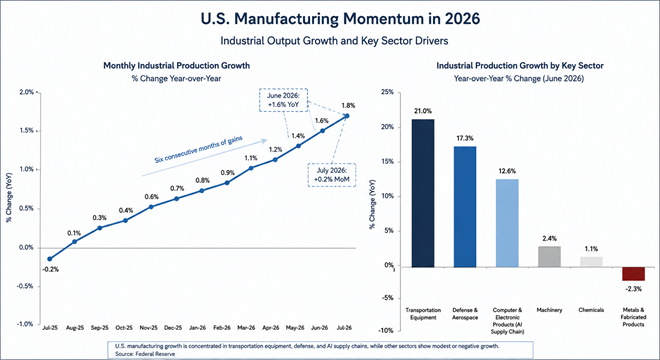
sustained momentum entering the second half of 2026. Industrial output posted
six consecutive months of gains through June 2026 resulting in a 1.6% year over
year increase. July added another 0.2% expansion to this upward trajectory.
Economic expansion currently remains highly concentrated within transportation
equipment defence production and artificial intelligence supply chains rather
than reflecting a broad-based commercial revival.
Navigating Capacity and Tariff Challenges
Rebuilding domestic industrial capacity presents complex
logistical hurdles. Tariff policies implemented under President Trump during
his second term explicitly aim to boost domestic manufacturing production.
These trade barriers create immediate short-term effects including higher costs
affecting imported machinery raw materials and intermediate component inputs.
Long term industrial adjustment requires massive capital investment directed
toward new factories skilled labour development infrastructure upgrades and
robust supplier networks. Economists caution that this comprehensive supply
chain restructuring process could take several years to fully materialize.
United States manufacturers rely heavily on intricate
international supply chains where crucial inputs cross sovereign borders
multiple times. Restricting foreign imports fundamentally risks raising
baseline operational costs and severely reducing American competitiveness
across vital global export markets. Balancing aggressive domestic expansion
alongside international commercial competitiveness remains a critical
macroeconomic challenge.
Implications Shaping Plastics Demand
Industrial plastics demand remains intricately tied to
broader manufacturing activity. Sustained macroeconomic growth could strongly
support elevated plastics consumption throughout the second half of 2026 and
well beyond. Industry analysts emphasize that the specific trajectory of
economic growth matters significantly. Key expansion drivers include the rapid
adoption of new production technologies the overall speed of domestic capacity
expansion and the ongoing ability of American industrial firms to compete
globally.
Strategic Pathways Benefiting Indian Exporters
This structural shift across American manufacturing presents
exceptional commercial opportunities benefiting Indian plastics exporters.
Supplying Specialized Intermediate Inputs
American manufacturing expansion depends heavily on adopting
new technologies and securing globally sourced intermediate inputs. Indian
exporters specializing in engineering plastics specialty resins and advanced
packaging films can strategically position themselves as reliable international
suppliers. Supplying these specialized raw materials fills critical supply
voids where United States domestic production capacity remains limited.
Leveraging Unmatched Cost Advantages
Higher import tariffs targeting foreign machinery and
industrial inputs will inevitably raise American domestic production costs.
Domestic exporters can leverage competitive pricing structures alongside recent
Free Trade Agreement tariff reductions secured with regions like the European
Union and Oman. These strategic trade pacts allow Indian enterprises to
aggressively redirect supply chains toward diverse international markets where
United States exporters gradually lose their core cost competitiveness. India
possesses immense potential to capture market share across third party nations
seeking cost effective plastic material alternatives.
Forging Strategic Capacity Partnerships
Rebuilding American manufacturing infrastructure requires
modern factories advanced machinery and reliable supplier networks. Indian
corporate firms can actively explore lucrative joint ventures and dedicated
technology partnerships connecting directly with United States companies
seeking cost effective international sourcing solutions for plastic components.
These bilateral partnerships remain particularly relevant across high growth
sectors including advanced consumer packaging automotive plastics integration
and specialized medical devices.
The second half of 2026 promises surging plastics demand
driven directly by United States manufacturing growth. Tariff driven cost
pressures simultaneously create massive strategic commercial openings.
Specialized Indian exporters offering competitive pricing and robust
international partnerships stand perfectly positioned to benefit immensely from
this structural transition. Proactively scaling domestic production
capabilities will undoubtedly elevate the Indian plastics sector to
unprecedented heights globally.
The second half of 2026 promises surging plastics demand driven directly by United States manufacturing growth. Tariff driven cost pressures simultaneously create massive strategic commercial openings. Specialized Indian exporters offering competitive pricing and robust international partnerships stand perfectly positioned to benefit immensely from this structural transition. Proactively scaling domestic production capabilities will undoubtedly elevate the Indian plastics sector to unprecedented heights globally.
Subscribe To Textile Excellence Print Edition
If you wish to Subscribe to Textile Excellence Print Edition, kindly fill in the below form and we shall get back to you with details.
Newsletter
Subscribe To Textile Excellence Mailing List


- December 09, 2022
'There Is Very High Acceptance For India

- December 09, 2022
'Advanced Machines & Service, Customer C

- October 09, 2023
First-time In The World: Rieter’s Auto

- July 28, 2026
Arvind Eyes Leadership In India's Premiu

- June 01, 2020
Karl Mayer Enables Automated Production

- June 05, 2023
Ultimax - All New Revolutionary Rapier W
- June 09, 2025
DyStar Becomes A Wholly Owned Subsidiary

- July 28, 2026